Featured

Jewelry project planner

Jewelry Designing

Planning a new collection it a bit time consuming and can be very over whelming. Its important to set goals and expectations from the start.

When I start a jewelry collection idea I usually try to plan out every detail. My project planner is a pretty simple ring binder journal you can pick up from any stationery store. White paper for sketches and doodles. Ruled lines jot down my copious notes and ideas in my lees than perfect handwriting. I love to fill the pages to do lists, reminders, rough sketches, and ideas for blog posts. I also like to have a calendar. I usually go through one planner every month.

Get a calendar and a pencil because your dates will change. Then you should decide on a launch date. Are you aiming for a holiday debut like Christmas or Valentine’s Day? Is this direct to market or are you selling wholesale because those Christmas orders get paced early. When do you need your samples for your buyer or photography? Don’t forget to get your marketing plan in order. Back out the time for product development and add a few weeks because it doesn’t happen over night and there are always problems. Know your target market and customer. Then there is a design process that requires committing to a key concept and building out a collection from it. Decide on price points and material quantity and quality. Then you have to get models and samples. Source your packaging and manufacture. Be sure to leave plenty of time for any unforeseen issues.

If it’s planned properly, given enough time for development and marked well you should end up with a great collection terrific collection of jewelry designed for your customer.

Featured

Welcome to LuoHu

LuoHu the Gateway to Jewelry Factories in China. LuoHu, one of the southernmost routes from Guangdong Provence mainland China to Hong Kong is the place where you pass through when you come to visit your China factories. A frenetic transportation hub, eclectic and somewhat questionable district in the ever-growing Shenzen city. Make sure you get on the right train going to the right place. LuoHu is the place where the Hong Kong MTR in the new territories meets the Shenzen Metro with the PRC checkpoint in between. When traveling by mass transit into mainland

LuoHu Station on the China side.

China I would take the MTR to the Lo Wu station on the Hong Kong side and then begin my trek through the customs checkpoint. It is a surreal experience for sure especially after a long flight. Almost 100 million people pass through this hyper busy checkpoint annually, or at least pre-pandemic times.  The sheer volume of the crowd is intense. It is competition for your personal space and its important to stand your ground without being confrontational.  

Upon exiting the customs hall, you are thrust into an all-out assault on the senses with the intense noise volume, robust smells and smoke from a blend of burning cigarettes and street food carts that hit you all at once. The immediate onslaught of your senses, while not necessarily bad can feel extremely overwhelming and confusing. Almost intoxicating at times. It is all further exasperated by the constant calls and shouts from local unlicensed livery drives, the chatter of locals waiting for their loved one or international travelers asking directions to the nearest copy mall.

Most of my Asia trips are planned around jewelry and consumer product trade shows on the mainland like the Shenzen jewelry and manufacturing show or the Canton fair in Guangzhou as well as the Hong Kong Jewelry and watch fair so that I could get the most out my time on the ground. I usually would arrive in HK airport early morning call my wife to say good night and then make my way to mainland China to start working the same day. To normalize and “push through” the jetlag I would plan factory visits and meetings right off the bat. In order to maximize my days in China as much as possible I would move from district to district traveling in a circular flow starting in Shenzen, making my way up through Dongguan then circling west towards Panyu the gold district of the region then back to Shenzen before returning to Hong Kong again.

Generally, after all my travel to Asia I find China is a safe country to travel around for business. Most of the Chinese people you meet are pleasant, straightforward, and basically dependable. However, China like Europe and areas in popular tourist cities in the US is far is from being immune to crime. So, take the usual traveling precautions and enjoy your factory tours and the local cuisine.  

Award-Winning Heritage Jewelry Entrepreneur Releases Groundbreaking Business Book

FOR IMMEDIATE RELEASE

The Heritage Brand: How to Build a Heritage Brand People Love is available now on Amazon in paperback and Kindle

Jennifer Derrig, the award-winning jewelry designer and founder of The Irish Jewelry Company and The Italian Jewelry Company, announces the publication of her debut business book, The Heritage Brand: How to Build a Heritage Brand People Love. The book is available in paperback and Kindle editions on Amazon.

The Business of Belonging

Drawing on more than two decades of experience building beloved online cultural destinations, Derrig tackles one of the most pressing questions facing small business owners today: why do some brands inspire lifelong loyalty while others are forgotten the moment the sale ends? Her answer is simple and deeply actionable. The difference is belonging.

“The Heritage Brand is for every artisan, cultural entrepreneur, and heritage brand owner who knows their product is meaningful but can’t figure out why it isn’t selling the way it should,” said Derrig. “I wrote the book I wish I’d had when I was starting out.”

Inside the Book

Readers will discover practical frameworks and proven strategies, including:

  • The neuroscience of why people pay more for products tied to identity and culture
  • How to close the “belonging gap” that keeps heritage brands from reaching their true audience
  • The diaspora market opportunity most brands completely ignore
  • How to build a membership model that turns first-time buyers into lifelong brand advocates
  • The language of belonging, and how to use it at every touchpoint of your business
  • A proven 12-month roadmap to building a heritage brand from the ground up

Whether selling Irish jewelry, Italian ceramics, Celtic knitwear, or any product rooted in cultural tradition, The Heritage Brand delivers the strategy, psychology, and tools to build a business people love, not just a store they visit.

Now Also an Online Course

The ideas in the book are now available as The Heritage Brand Bundle, three video courses on Udemy. See them at theheritagebrandbook.com/course/

About the Author

Jennifer Derrig is the founder and creative director of The Irish Jewelry Company (est. 2006) and The Italian Jewelry Company, two of the most respected cultural heritage jewelry destinations online. A classically trained jewelry designer and alumna of the Fashion Institute of Technology in New York City, Jennifer began her career designing for major jewelry brands before building her own companies from the ground up.

Recognized with multiple business awards and serving as Executive Vice President of her local Chamber of Commerce, Jennifer has dedicated her career to honoring cultural heritage and helping other entrepreneurs do the same. She travels regularly to Ireland and Europe with her family.

Book Details

Title: The Heritage Brand: How to Build a Heritage Brand People Love

Author: Jennifer Derrig

Publication Date: May 31, 2026

Format: Paperback (ISBN 9798199347402) and Kindle

Paperback: amazon.com/dp/B0H3HDX2FR

Kindle: amazon.com/dp/B0H2H6MNGN

Media Contact

Jennifer Derrig

Author, The Heritage Brand; Founder, The Irish Jewelry Company & The Italian Jewelry Company

Email: theirishjewelrycompany@gmail.com

Phone: 516-308-2436

Website and media kit: jenniferderrig.com/media-kit/

LinkedIn: linkedin.com/in/jennifer-derrig/

###

The Business of Belonging starts here.

Author Jennifer Derrig Turns The Heritage Brand Into Three Online Courses for Small Business Owners

FOR IMMEDIATE RELEASE

The Heritage Brand Bundle: Build a Business People Belong To is now live on Udemy, with 50% off through November 18, 2026 for readers of this announcement

Jennifer Derrig, author of The Heritage Brand: How to Build a Heritage Brand People Love and founder of The Irish Jewelry Company and The Italian Jewelry Company, announces the launch of The Heritage Brand Bundle, three online video courses that turn the ideas in her book into hands-on work for any small business. All three courses are now available on Udemy.

From Reading to Doing

The book explains why some brands inspire lifelong loyalty while others are forgotten the moment the sale ends. The courses walk owners through doing something about it, one project at a time. They are built for owners, founders, family-business successors, side-hustlers and marketers in any industry: a deli, a pub, a bakery, a barbershop, a hardware store or a craft studio.

“Readers kept asking me the same question: where do I start on Monday morning?” said Derrig. “The courses are my answer. Every lesson ends with something you can put to work in your own business that week.”

Three Courses, Three Finished Projects

  • Course 1: The Heritage Brand Method: Business of Belonging (beginner). Identity, story, signals, community and promise. Students measure their Belonging Gap and finish with a one-page Belonging Brief.
  • Course 2: Heritage Brand Marketing: Content That Builds Belonging (all levels). Students turn the brief into social posts, email and community work, and finish with a 90-Day Belonging Content Calendar.
  • Course 3: Heritage Brand Growth: 12-Month Belonging Roadmap (intermediate). Products, pricing, partnerships and new markets, planned so a business grows without losing its soul. Students finish with a 12-Month Belonging Roadmap.

Each project feeds the next, and printable worksheets for every lesson are included with the courses.

Launch Offer: 50% Off

Readers of this announcement can enroll at 50% off through November 18, 2026. The discount is applied automatically through these links:

Limited-time offer, valid on Udemy only through November 18, 2026. One use per person. Price shown at checkout.

About the Author

Jennifer Derrig is the founder and creative director of The Irish Jewelry Company (est. 2006) and The Italian Jewelry Company. A jewelry designer trained at the Fashion Institute of Technology in New York City, she began her career designing for major jewelry brands before building her own companies from the ground up. She also ran a brick-and-mortar Irish gift shop for eleven years, which closed during COVID. Recognized with multiple business awards, she serves as Executive Vice President of her local Chamber of Commerce. The Heritage Brand was published in May 2026.

Course Details

Bundle: The Heritage Brand Bundle: Build a Business People Belong To

Instructor: Jennifer Derrig

Platform: Udemy

Courses and full prices: The Heritage Brand Method ($129.99), Heritage Brand Marketing ($149.99), Heritage Brand Growth ($174.99)

Course page and worksheets: theheritagebrandbook.com/course/

The book: amazon.com/dp/B0H3HDX2FR (paperback) and amazon.com/dp/B0H2H6MNGN (Kindle)

Media Contact

Jennifer Derrig

Author, The Heritage Brand; Founder, The Irish Jewelry Company & The Italian Jewelry Company

Email: theirishjewelrycompany@gmail.com

Phone: 516-308-2436

Website and media kit: jenniferderrig.com/media-kit/

LinkedIn: linkedin.com/in/jennifer-derrig/

###

The Business of Belonging starts here.

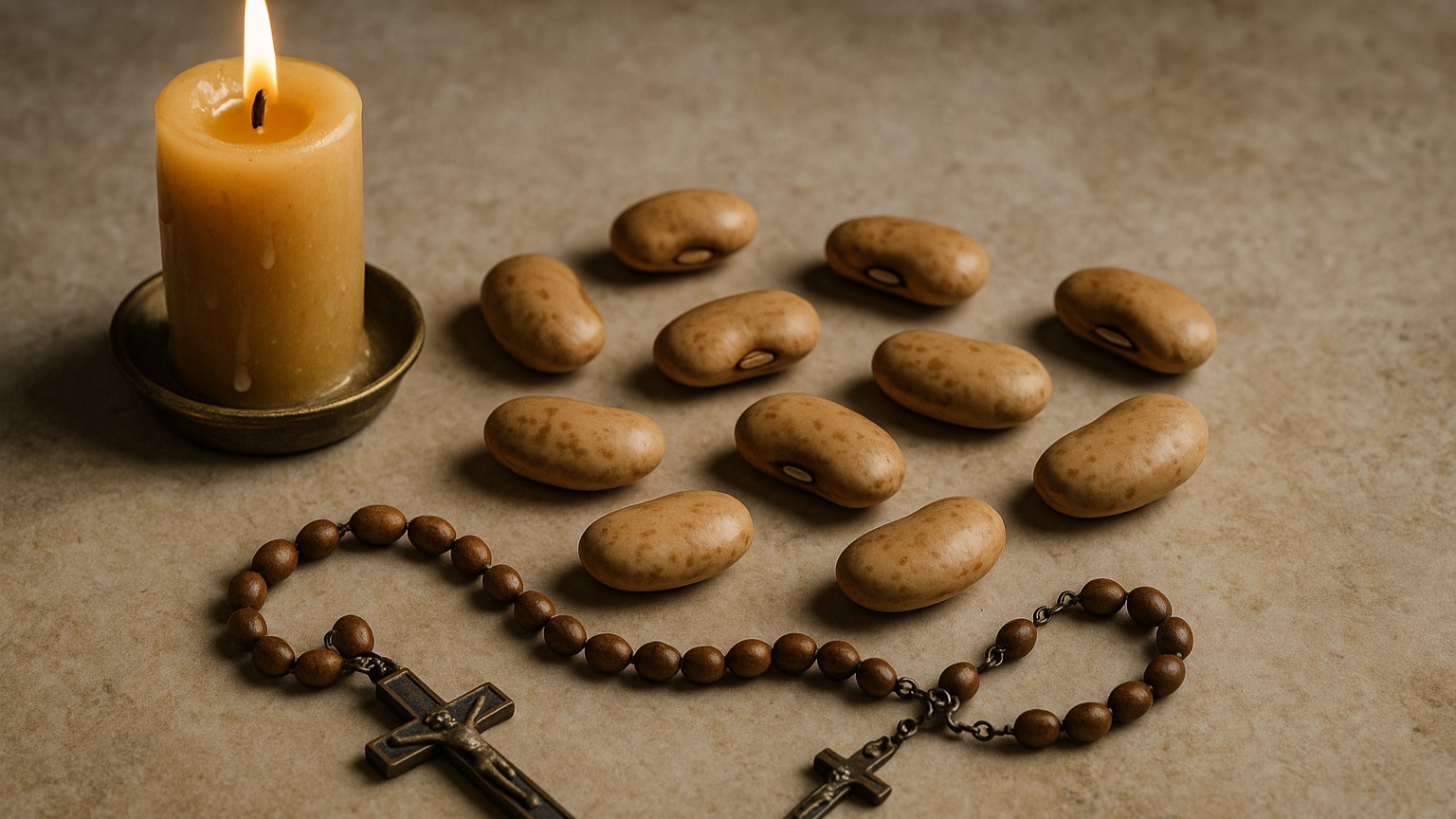
Sicilian Favomancy Divination: The Ancient Art of Fortune-Telling with Beans

Divination has always fascinated humanity. Across cultures, people have sought signs from the natural world to understand fate, seek guidance, or glimpse what the future holds. In Sicily, one of the most unique and enduring traditions of folk divination is favomancy, the mystical practice of fortune-telling with beans. Though little known outside the island and neighboring Mediterranean regions, favomancy carries a deep history rooted in ancient civilizations, oral traditions, and Sicilian folk magic.


Origins of Favomancy

The word favomancy comes from the Latin faba (bean) and the Greek suffix -mancy (divination). Beans, especially broad beans (fave in Italian), have held symbolic significance in Mediterranean societies for millennia.

  1. Ancient Greece – The philosopher Pythagoras famously banned beans from his followers’ diet, believing they contained the souls of the dead. This taboo highlights the mystical associations beans carried, often linked to life, death, and communication with the spiritual world.
  2. Rome and the Lemuria Festival – During this May ritual, Romans threw black beans over their shoulders to appease the restless spirits of the dead. Beans were thought to carry souls and served as both offerings and protective charms.
  3. Early Christianity and Folk Belief – As Christianity spread, folk practices fused with religious traditions. In Sicily, beans remained tied to rituals of the dead and divination, becoming central to seasonal festivals and fortune-telling rites.

Thus, favomancy evolved as a fusion of ancient pagan symbolism, classical divinatory methods, and local Sicilian folk traditions.


History of Favomancy in Sicily

In Sicily, beans were not just food; they were vessels of fate. Historical accounts suggest that Sicilian women, especially older matriarchs or village wise women (magare), practiced favomancy during gatherings, feast days, and moments of uncertainty.

  • Tied to Saints’ Festivals – Broad beans, abundant in Sicilian fields, were offered on feast days such as La Festa di San Giuseppe (St. Joseph’s Day) and became associated with abundance, protection, and prophecy.
  • Rural Folk Magic – Farmers and villagers often turned to favomancy before planting seasons, weddings, or major decisions. The casting of beans was believed to reveal divine will, helping to guide both everyday and spiritual choices.
  • Transmission by Word of Mouth – Like many Sicilian folk traditions, favomancy was rarely written down. Instead, it was passed from generation to generation, often within families. This secrecy preserved its aura of mystery.

Techniques of Sicilian Favomancy

While methods varied from village to village, most techniques relied on numbers, patterns, and symbolic interpretation of beans cast or counted in a ritual.

  1. Casting the Beans
    • A set of dried broad beans would be blessed with a prayer or incantation.
    • The diviner cast them onto a flat surface or cloth.
    • The way beans landed—clusters, directions, or shapes—was read for meaning.
  2. Odd and Even Method
    • A handful of beans was divided and counted.
    • Odd numbers were considered auspicious (signs of luck, love, or success).
    • Even numbers suggested delays, obstacles, or warnings.
  3. Symbolic Patterns
    • Cross shape – divine blessing or spiritual intervention.
    • Circle – cycles of life, fertility, or protection.
    • Scattered beans – confusion, conflict, or unrest.
    • Beans forming pairs – union, marriage, or partnership.
  4. The Thirteen Beans Ritual
    • Some traditions used a set of thirteen beans, each symbolizing aspects of life (health, wealth, love, death, travel, children, etc.).
    • The diviner assigned meanings to the beans before casting and interpreted which ones landed face-up or clustered together.
  5. Dream Favomancy
    • Beans were sometimes placed under pillows. The dreams that followed were believed to carry prophetic meaning.

Favomancy and the Sicilian Worldview

Favomancy wasn’t merely a game of chance; it reflected Sicily’s worldview, blending Catholicism with folk superstition and ancient ritual.

  • Life and Death Symbolism – Beans represented fertility and nourishment, but also spirits and the afterlife.
  • Women’s Wisdom – Favomancy was often performed by women, reinforcing their role as keepers of household spirituality and community fortune-tellers.
  • Integration with Faith – Many Sicilians invoked saints or recited prayers before casting beans, seeking divine blessing alongside folk practice.

Favomancy in Modern Times

While no longer widely practiced, traces of favomancy survive in Sicilian folk memory and seasonal celebrations. On St. Joseph’s Day, families still prepare dishes with broad beans, honoring their symbolic role as protectors against famine. Folk healers and folklorists preserve favomancy as part of Sicily’s intangible cultural heritage.

Today, favomancy holds renewed fascination as people rediscover folk divination and ancestral wisdom. It connects modern seekers to the rhythms of nature, the cycles of life, and the enduring mysteries of Sicilian tradition.


Conclusion

Favomancy is more than fortune-telling; it is a reflection of Sicily’s layered history, where ancient Greek philosophy, Roman ritual, Christian devotion, and folk magic intertwine. With nothing more than a handful of beans, Sicilians once sought to understand life’s greatest mysteries.

The practice reminds us that sometimes, wisdom comes not from grand temples or books, but from the humblest gifts of the earth, like beans, simple yet powerful symbols of fate, fertility, and faith.

Mastering the Irish Goodbye: The Art of Disappearing Like a Pro!

“Ever slipped out of a party unnoticed? Congratulations, you’ve pulled off an Irish goodbye!”

An Irish goodbye, sometimes called a French exit, is the time-honored act of leaving a gathering without saying farewell. While some people see it as rude, others celebrate it as efficient, classy, or simply a survival tactic when social batteries hit zero. The truth? The Irish goodbye is less about rudeness and more about practicality, with deep roots in cultural quirks and linguistic twists.

But why exactly is it called the Irish goodbye? Let’s dive into the history, etiquette, and global variations of this disappearing act.


Why It’s Called the “Irish Goodbye”

The origins of the term are fuzzy, but most agree it’s primarily an English-speaking invention. Some suggest it was born out of old stereotypes about the Irish, while others argue it reflects a universal human habit given a catchy label.

Interestingly, different cultures have their own names for the same act:

  • In France, they call it “filer à l’anglaise” (to leave the English way).
  • In Germany, it’s “Polnischer Abgang” (Polish exit).
  • In the U.S. and U.K., the “Irish goodbye” has stuck as the most colorful term.

So while the Irish don’t necessarily own the practice, the phrase endures because it’s funny, memorable, and let’s be honest, relatable.


What Exactly Is an Irish Goodbye?

At its simplest:
Definition – An Irish goodbye means slipping out of a social event, whether it’s a party, wedding, or bar night, without announcing your departure to the host or guests.

It’s a “vanishing act” that requires no excuses, no awkward hugs, and no drawn-out goodbyes.


Is an Irish Goodbye Rude or Brilliant?

Etiquette matters. Whether an Irish goodbye is rude or not depends on:

  • Size of the gathering – At a huge party, nobody will notice. At an intimate dinner with six people, disappearing might sting.
  • Relationship with the host – If it’s your best friend, a quiet “thanks for having me” might be better than a ghost exit.
  • Cultural context – In some places, efficiency is respected. In others, skipping farewells is considered impolite.

Pro tip: At big events, the Irish goodbye is often the smoothest move. At smaller ones, a whispered goodbye to the host earns more points.


Why People Use the Irish Goodbye

  1. Avoiding the Farewell Marathon
    We all know how goodbyes can snowball: one hug turns into ten, one goodbye turns into a 20-minute ordeal. An Irish goodbye saves time and awkwardness.
  2. Social Battery on Empty
    For introverts or anyone drained after a night of chatter, sneaking out is self-preservation.
  3. Too Much Drink
    Sometimes, leaving quietly is safer than making a scene.
  4. Polite Disappearance
    Oddly enough, disappearing can be less disruptive than loudly announcing you’re leaving.

The Global Family of Disappearing Acts

The Irish goodbye isn’t the only member of this family:

  • French Exit – Popular in the U.S., same meaning.
  • Going Houdini – A modern, playful term inspired by the magician.
  • Dutch Leave – Another variation, though less common today.

This shows that every culture has recognized the universal instinct to “slip away quietly.”


The “Ole Irish Goodbye”

Sometimes you’ll hear the phrase “the ole Irish goodbye.” This is just a colorful way of saying the same thing, a playful twist, emphasizing the humor and tradition of it. Think of it as a wink and nod to those who consider it an art form.


People Also Ask

What is the Irish goodbye?
It’s leaving a party or gathering without saying goodbye. Quick, quiet, and often unnoticed.

What is an Irish goodbye in Urban Dictionary?
Urban Dictionary defines it as “leaving without telling anyone,” usually from a bar or party, often after one too many drinks.

What is a French exit vs Irish goodbye?
They mean the same thing: disappearing without farewells. “French exit” is more common in Europe, while “Irish goodbye” dominates in the U.S.

What is the Ole Irish goodbye?
A humorous, folksy way of referring to the same practice, making your exit without formalities.


Conclusion: The Irish Goodbye as a Life Hack

Far from being rude, the Irish goodbye can be seen as a social life hack, a way to leave gracefully without disrupting the flow of the night. In fact, it’s often more considerate than holding up the party with endless hugs and chatter.

So the next time you slip out unnoticed, just remember: you’ve mastered an ancient art. Whether you call it an Irish goodbye, French exit, or going Houdini, you’re disappearing like a pro.

Witch Trials in Ireland: The Forgotten Stories of Fear and Folklore

When we think of witch trials, most minds leap straight to Salem in colonial Massachusetts or to continental Europe, where tens of thousands of people were executed between the 15th and 18th centuries. But Ireland? Surprisingly, the Emerald Isle witnessed far fewer witch trials than its neighbors. In fact, only a handful are recorded in the historical record, most famously the Kilkenny Witch Trial of 1324 and the Islandmagee Witch Trial of 1711.

These stories are tragic, chilling, and deeply revealing of Ireland’s unique cultural relationship with magic, religion, and the supernatural. Unlike in other countries, Irish witch trials often intersected with folklore about fairies, superstition, and church politics rather than mass hysteria.

Let’s dive into the history of Ireland’s witch trials, why there were so few, and what makes the Irish approach to witchcraft so different from the infamous witch-hunts elsewhere.


The Kilkenny Witch Trial (1324): Ireland’s First Witch Execution

Context

The Kilkenny trial remains the most famous witch trial in Ireland. At its center was Alice Kyteler, a wealthy and influential merchant’s wife. Alice had married multiple times, each time acquiring wealth after her husbands mysteriously died. This raised suspicion among local authorities, particularly Richard de Ledrede, the Bishop of Ossory.

Bishop Ledrede accused Alice and her household of practicing sorcery, heresy, and consorting with demons, among the charges: brewing potions made from the organs of sacrificed animals, performing rituals at crossroads, and invoking spirits for power.

Outcome

Alice Kyteler fled Ireland before she could be tried, escaping her fate. But her maidservant, Petronilla de Meath, was not so lucky. Under torture, Petronilla “confessed” to witchcraft and claimed her mistress taught her sorcery.

On November 3, 1324, Petronilla was burned alive at the stake in Kilkenny. She became the first person executed for witchcraft in Ireland, her name etched into history as both a victim of superstition and church authority.


The Islandmagee Witch Trial (1711): Ireland’s Last Witch Trial

Context

Nearly 400 years later, Ireland witnessed its last major witch trial in the coastal village of Islandmagee, County Antrim.

An 18-year-old girl, Mary Dunbar, claimed she was being tormented by supernatural forces. She accused eight women and one man of bewitching her, describing attacks where unseen forces pricked her skin, threw her into fits, and whispered blasphemous curses.

Outcome

Authorities arrested the accused and brought them to trial in Carrickfergus. Despite weak evidence, widespread fear and superstition sealed their fate. All nine were found guilty.

Instead of execution, the accused were sentenced to a year in prison and time in the public pillory. Still, the trial left a lasting mark as a “lingering injustice” and is remembered as Ireland’s final witch trial.


Why Were There Fewer Witch Trials in Ireland?

Unlike Scotland, Germany, or France, where thousands perished, Ireland’s witch trials were rare. Why?

1. Different Cultural Approach to the Supernatural

Ireland’s folklore was filled with fairy belief, folk cures, and magical traditions. Many practices that might have been condemned as witchcraft elsewhere were tolerated or even respected in Irish communities.

For example, a healer using herbs or charms might be seen as working with fairy power rather than demonic influence. This cultural distinction protected many from accusations.

2. Legal Framework

Ireland’s legal system treated witchcraft differently. Unlike England’s Witchcraft Act of 1542, Irish courts often categorized witchcraft as heresy rather than a stand-alone crime. This meant fewer executions, as charges were harder to prosecute.

3. Church vs. Local Tradition

While the Catholic Church condemned sorcery, Irish rural communities continued to rely on wise women, herbalists, and charm-makers. Instead of fearing them, many saw these individuals as protectors against misfortune or the evil eye.


Witch Trials in a Wider Context

To understand how rare Irish witch trials were, let’s compare:

  • Scotland: Between 3,000 and 4,000 people were executed for witchcraft.
  • Germany: Some regions saw entire villages wiped out in witch hunts.
  • England: Over 500 executions between the 15th and 18th centuries.
  • Ireland: Only four documented trials, with one execution (Petronilla de Meath).

This contrast highlights Ireland’s unique blend of folklore and faith, which softened the harsh edges of witch-hunting hysteria.


Witchy Places to Visit in Ireland

For those drawn to history, folklore, and witchy tourism, a few places in Ireland still echo with these stories:

  • Kilkenny: Walk the medieval streets where Alice Kyteler once lived. Today, you can even visit Kyteler’s Inn, a pub linked to her legacy.
  • Islandmagee, Co. Antrim: A quiet coastal village with a dark memory of Ireland’s last witch trial.
  • Fairy Forts & Hawthorn Trees: Scattered across Ireland, these sites embody the old beliefs in magic and the supernatural. Cutting down a fairy tree is still said to bring bad luck!

People Also Ask

Were there ever witch trials in Ireland?
Yes, though rare. The most notable were the Kilkenny trial (1324) and the Islandmagee trial (1711).

Where are the witchy places to visit in Ireland?
Kilkenny (linked to Alice Kyteler), Islandmagee in Antrim, and various fairy forts and sacred sites are still associated with magic.

Which country had the worst witch trials?
Germany is often cited, with tens of thousands executed. Scotland and Switzerland also had high numbers.

How many witches did Matthew Hopkins execute?
Matthew Hopkins, the infamous English “Witchfinder General,” was responsible for around 300 executions in England during the 1640s.

Who was executed for witchcraft in Ireland?
Petronilla de Meath (1324) was the first and only woman burned at the stake in Ireland for witchcraft.

Did the Irish have immunity to witch-hunting?
Not immunity, but Ireland’s cultural beliefs, legal framework, and folklore traditions meant witch trials were rare compared to the rest of Europe.


Conclusion: Folklore Over Fear

Ireland’s witch trials, though few, remain powerful reminders of how fear, religion, and folklore intertwined in history. The tragedy of Petronilla de Meath and the injustice of the Islandmagee trial reflect the darker side of belief but also highlight Ireland’s unique resilience against the witch-hunting frenzy that consumed so much of Europe.

Today, these stories serve as cautionary tales and cultural touchstones. Whether visiting Kyteler’s Inn in Kilkenny or standing among the windswept fields of Islandmagee, one can still feel the echoes of Ireland’s witch women and men caught between folklore and fear.

And perhaps, unlike other nations, Ireland’s deep-rooted respect for fairy magic, folk cures, and community tradition shielded it from the worst of the witch-hunting terror.

Top 10 Irish Superstitions You Need to Know

Ireland is a land of myths, folklore, and centuries-old traditions where the line between the natural and the supernatural often blurs. From fairies to omens, Irish superstitions are woven into daily life, offering both warnings and blessings. Whether you believe in them or simply find them fascinating, these stories reveal much about Ireland’s culture and enduring charm. Let’s explore the top 10 Irish superstitions you need to know.


1. The Banshee’s Wail

Perhaps the most famous of all Irish superstitions, the banshee is said to be a ghostly woman whose mournful cry foretells death in a family. If you hear her wail in the still of night, it’s believed to be a dire omen.


2. Cutting Down a Fairy Tree

Fairy trees, usually lone hawthorns, are sacred to the “Good People.” Cutting one down is said to bring terrible misfortune. Even modern road projects in Ireland have been diverted to avoid disturbing these enchanted trees.


3. Open the Window When Someone Dies

When a loved one passes, many Irish families open a window to allow the soul to escape freely, ensuring the spirit’s peaceful journey to the otherworld.


4. Spilling Salt

If you spill salt, tradition says you must toss a pinch over your left shoulder to blind the devil waiting there. This old superstition made its way to Ireland through Europe but is still widely known.


5. Itchy Palms

An itchy right palm means you’ll soon receive money, while an itchy left palm warns of financial loss. This superstition is still whispered among families hoping for a stroke of luck.


6. Robins as Messengers

Spotting a robin is believed to be a sign that a loved one who has passed is visiting or sending comfort. These tiny red-breasted birds are cherished symbols of remembrance and hope.


7. The May Bush and Fairy Graves

During May, decorating a tree with ribbons and flowers honors fairies and protects against mischief. Likewise, disturbing fairy forts or ancient graves invites disaster, as these places are thought to be gateways to the otherworld.


8. Horseshoes for Luck

Hanging a horseshoe above a door brings good fortune. But be careful, place it facing upwards to hold in luck. Hung upside down, it lets all your luck run out!


9. New Shoes on the Table

Placing new shoes on a table is considered very bad luck in Ireland, said to invite illness or even death. This simple act is avoided in many households to this day.


10. Crows and Omens

A single crow might signal bad news, but three together bring joy. Birds often appear as messengers in Irish folklore, connecting the living with unseen realms.


Final Thoughts

Irish superstitions reflect a deep respect for nature, the unseen, and the mysteries of life and death. Whether it’s the eerie wail of the banshee or the luck of a horseshoe, these beliefs remind us of IIreland’s rich cultural heritage. And next time you see a robin or feel an itchy palm, perhaps you’ll wonder if there’s more to it than mere chance.

Irish Harvest Festival: Michaelmas & Celtic Autumn Feasts

The arrival of autumn in Ireland has always been more than just a change in season; it marks a time of abundance, gratitude, and preparation for the long, dark winter ahead. In ancient times, the Irish harvest was celebrated through festivals that combined Celtic fall traditions with later Christian observances like Michaelmas. These gatherings were filled with feasts, storytelling, rituals, and symbolic practices that blended the mystical with the practical. Today, echoes of these celebrations remain in Irish culture, offering a glimpse into a way of life deeply tied to the land and its cycles.


The Meaning of the Irish Harvest

The Irish harvest was central to survival. Grains, vegetables, and fruits gathered during autumn determined whether a family or community would thrive through the winter. Traditionally, harvest time began after Lughnasadh in August and extended through September, culminating in feasts such as Michaelmas at the end of the month.

The harvest wasn’t just about food; it symbolized balance. It was a time to honor the Celtic fall traditions that celebrated the bounty of the earth, while also acknowledging the waning light as days grew shorter. Fields were cleared, animals were slaughtered for meat, and thanks were given to gods, saints, and spirits alike.


Michaelmas – The Feast of St. Michael

Christian and Celtic Blending

Michaelmas, held on September 29, honored St. Michael the Archangel, the protector against evil and the harvester of souls. When Christianity spread through Ireland, this feast merged with older Celtic harvest rituals. It marked the turning point of the farming year when debts were settled, workers were paid, and contracts renewed.

Michaelmas Goose and Other Foods

One of the most famous Michaelmas traditions in Ireland was the eating of the Michaelmas goose. Families who could afford it would roast a fattened goose, often served with apples and potatoes. Goose fat was also said to protect against illness during the cold months ahead.
Other staples included:

  • Colcannon (mashed potatoes with cabbage or kale)
  • Barmbrack (fruit bread linked with divination)
  • Apples from the autumn harvest
  • Blackberries, which folklore warned should not be picked after Michaelmas, as the devil was said to spit on them.

Folklore and Superstitions of Michaelmas

  • Protecting Health: Eating goose on Michaelmas was believed to ensure good health for the coming year.
  • Weather Predictions: Farmers watched Michaelmas weather closely, believing it forecasted winter conditions.
  • Blackberry Superstition: A widely held Irish belief held that after Michaelmas, blackberries were spoiled because the devil had cursed them.

Celtic Fall Traditions and Festivals

Long before St. Michael, the Irish honored the harvest with their own rituals. Celtic fall traditions reflected the sacred connection between the natural world and the divine.

Lughnasadh’s Influence

Though primarily celebrated in August, Lughnasadh set the stage for the harvest season. It was dedicated to Lugh, the god of skill and craftsmanship, and featured first-fruit offerings, athletic games, and matchmaking. By Michaelmas, these celebrations shifted to a more solemn recognition of the waning sun and the need for preservation.

Samhain Approaches

Michaelmas was not the end of harvest festivals; it was a bridge to Samhain in late October, when the last of the crops were gathered, and the Celtic new year began. Samhain carried a more spiritual and supernatural weight, while Michaelmas focused on the practical balance of food, contracts, and protection.


Rituals and Customs of the Irish Harvest

The Irish harvest wasn’t only about food and feasts. Customs carried deep symbolic meaning:

  • The Last Sheaf: Farmers often saved the last sheaf of wheat as a charm for good luck. Sometimes it was woven into a Corn Dolly, representing fertility and protection.
  • Bonfires: Leftover from pagan traditions, fires were lit to honor the sun’s power as it faded.
  • Divination Games: Young people used harvest foods like apples and barmbrack to predict their future, especially in matters of love and marriage.
  • Offerings of Thanks: Small gifts of grain or bread were left at sacred wells and stones to appease spirits and ensure blessings.

Michaelmas in Irish History

During medieval times, Michaelmas was one of the “quarter days” when rents were due, servants were hired, and fairs were held. It wasn’t only a religious feast but an economic and social anchor point. Entire villages came together for fairs featuring music, horse trading, storytelling, and dancing.

These fairs carried on traditions from Celtic gatherings like the Aonach, where clans met to celebrate, settle disputes, and arrange marriages. By blending Christian rituals with older Celtic customs, Michaelmas became a truly Irish hybrid celebration.


Symbols of Michaelmas and Celtic Autumn

The Goose

A symbol of protection, sustenance, and foresight.

Blackberries and Apples

Linked to fertility, temptation, and divine blessings.

The Sheaf or Corn Dolly

Representative of the harvest spirit and carried forward into the next planting season.

St. Michael the Archangel

Protector and warrior, blending Christian ideals with Celtic warrior traditions.


How Irish Harvest Traditions Live On Today

While the large-scale harvest feasts of old are no longer central to Irish life, many customs endure:

  • Families still bake barmbrack around late September and October.
  • Irish festivals in towns and villages honor local harvests with food fairs.
  • Michaelmas remains a date of cultural memory, often tied to agricultural events.
  • Folklore, such as the “devil spoiling blackberries,” is still retold in rural areas.

Even in modern celebrations like the National Ploughing Championships, echoes of ancient Celtic fall traditions remain in Ireland’s connection to the land and its cycles.


Celtic Jewelry Inspired by Autumn Festivals

Harvest rituals often included wearing or gifting symbolic jewelry. Celtic knots, sheaves of wheat, and protective talismans were linked to abundance and protection. Today, jewelry inspired by Celtic fall traditions continues to carry these meanings.

Pieces like the Celtic Knot Jewelry serve as modern reminders of ancient cycles of life, death, and renewal. Just as harvests ensured survival, jewelry celebrates endurance and continuity in Irish heritage.


Conclusion

The Irish harvest season, with Michaelmas at its center, reflects Ireland’s ability to weave together the practical and the mystical. From Celtic fall traditions rooted in the land to Christian overlays honoring saints, the autumn feasts of Ireland highlight gratitude, community, and resilience.

Today, these customs endure in folklore, food, and symbolic practices, reminding us to pause, give thanks, and honor both the abundance and impermanence of life. Whether through baking barmbrack, enjoying a Michaelmas goose, or wearing Celtic jewelry with harvest symbolism, these traditions keep Ireland’s rich cultural heritage alive.

The Promise Ring and Its Significance In Irish Culture

The Irish Promise Ring and its Significance in Celtic Culture

In Celtic culture, jewelry has always carried meaning beyond simple adornment. From intricate knots that symbolize eternity to rings that express love and loyalty, these designs embody centuries of tradition. One of the most cherished pieces to emerge in modern times is the promise ring, a token of devotion, loyalty, and intention. Within Irish tradition, the Claddagh design has become one of the most popular ways to wear a promise ring, making it both a symbol of heritage and heartfelt emotion.


What is a Promise Ring?

A promise ring is a meaningful piece of jewelry given to symbolize commitment between two people. It represents a pledge whether it’s a promise of fidelity, a vow of future engagement, or simply a way of saying, “I’m devoted to you.” Unlike an engagement ring, which specifically signals marriage, a promise ring can carry many interpretations.

For young couples, a promise ring may signify exclusivity and the beginning of a serious relationship. For others, it may serve as a placeholder until the time is right for an engagement. In every case, a promise ring communicates loyalty and intention.


Is a Promise Ring the Same as a Commitment Ring?

The terms are often used interchangeably, but a promise ring and a commitment ring can have subtle differences. A promise ring generally reflects a personal vow made between two people, while a commitment ring may also symbolize shared values, religious faith, or even a friendship bond.

Both pieces carry weight and emotion, but the Irish Claddagh design has emerged as one of the most meaningful settings for a promise ring, due to its timeless symbols of love, friendship, and loyalty.


Origin of the Promise Ring: Story of the Posy Ring

The promise ring has deep historical roots. During the Renaissance, lovers exchanged “posy rings,” simple bands engraved with short poems or romantic inscriptions. These inscriptions, known as “posies,” were declarations of love and devotion, making the rings early precursors of the modern promise ring.

In England and Ireland, posy rings were particularly cherished among couples who wanted to declare their bond publicly. Over time, the tradition of the posy ring evolved into the more defined promise ring, a tradition still cherished today.


The Irish Claddagh Ring: The Perfect Choice for a Promise Ring

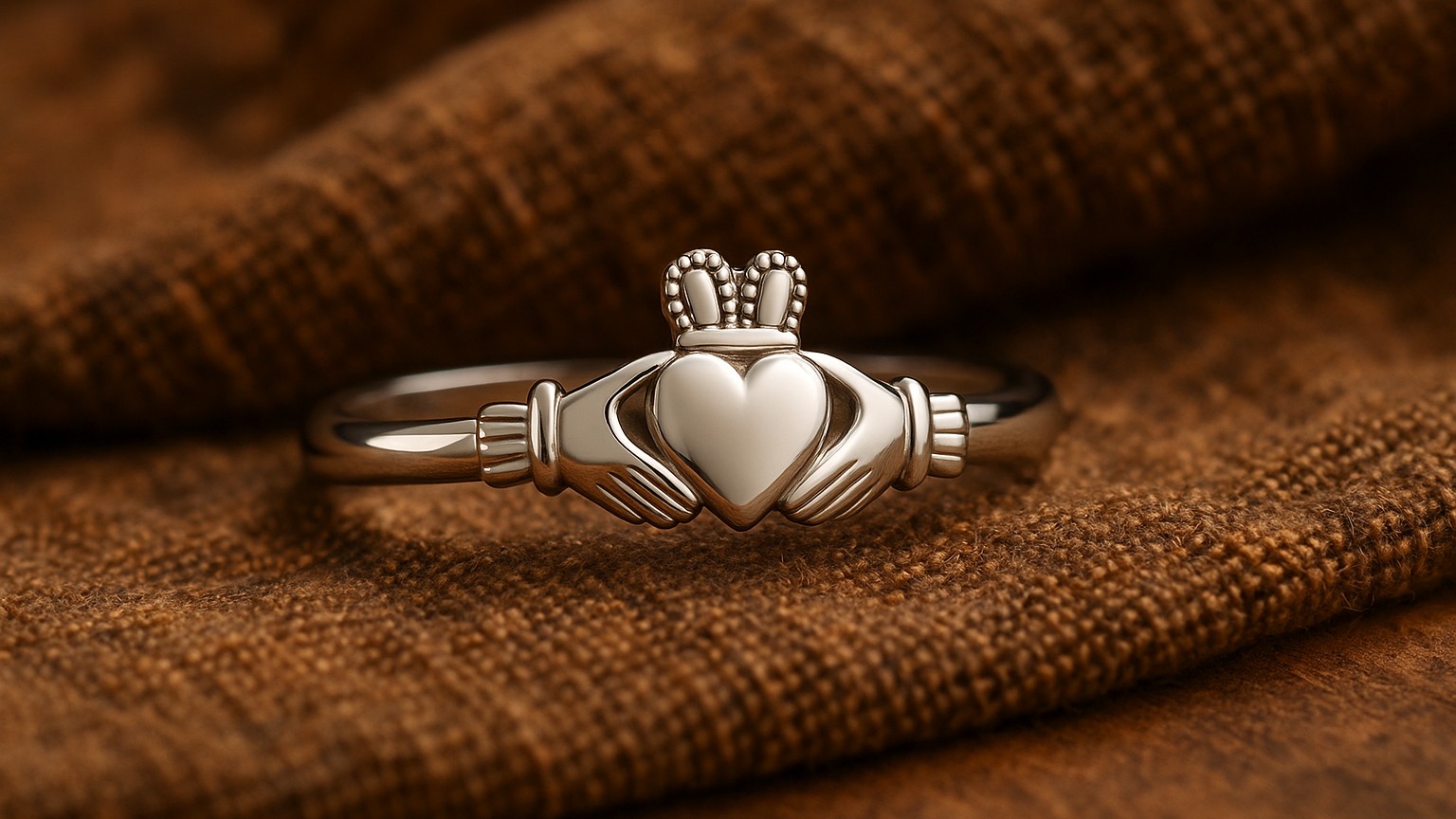
Among all designs, the Irish Claddagh has become synonymous with the promise ring. This traditional ring features a heart (representing love), hands (friendship), and a crown (loyalty). These three elements make the Claddagh one of the most perfect choices for a promise ring.

Origin of the Claddagh Ring?

The Claddagh design dates back to the 17th century in a small fishing village near Galway, Ireland. It is said that Richard Joyce, an Irishman captured by pirates, learned the art of goldsmithing while enslaved. Upon his release, he crafted the first Claddagh ring, dedicating it to his true love. This story of love, devotion, and loyalty resonates beautifully with the meaning of a promise ring.

Discover our Claddagh Rings

Explore our collection of Claddagh Rings here.

Our authentic designs are perfect for those looking for a heartfelt promise ring rooted in Irish tradition.


Crossover Knot Claddagh Ring Design

The Crossover Knot Claddagh Ring blends two powerful Celtic symbols into one. The infinity knot woven into the band represents eternity, while the Claddagh itself reflects love, friendship, and loyalty. Together, they create an exquisite promise ring that speaks of everlasting devotion.


Diamond and Sterling Silver Claddagh Stackable Ring Set

For a modern and versatile style, our Diamond and Sterling Silver Claddagh Stackable Ring Set is an elegant choice. This set can be worn together or separately, making it ideal as a promise ring that grows with your relationship.


How to Give a Promise Ring?

The giving of a promise ring should be heartfelt and sincere. There are no strict rules, but here are some meaningful ways to present it:

  • Private and Romantic: Over dinner, a quiet walk, or at a personal spot with shared memories.
  • Special Occasion: Birthdays, anniversaries, or holidays can be ideal times to gift a promise ring.
  • Symbolic Gesture: Some choose to recite a personal vow or read a poem when presenting a promise ring, echoing the ancient posy ring tradition.

The most important aspect is the sincerity of the moment. A promise ring should always carry genuine intent.


How Much Should I Spend on a Promise Ring?

Unlike engagement rings, there are no rules about cost when it comes to a promise ring. The focus is on the meaning rather than the price. Some couples choose sterling silver or simple gold bands, while others prefer more elaborate designs with gemstones or diamonds.

A good guideline is to spend what feels comfortable while ensuring that the promise ring is a piece your partner will cherish and proudly wear. The Irish Claddagh, in sterling silver or gold, offers a meaningful option that balances affordability with tradition.


The Bottom Line:

A promise ring is a timeless token of love, devotion, and loyalty. In Celtic culture, where symbolism and tradition hold deep meaning, the Claddagh design is the perfect representation of what a promise ring should stand for. Whether you choose a simple silver design or a diamond-accented version, the sentiment remains powerful.


Claddagh September Birthstone Ring

For those looking for a personalized touch, the Claddagh September Birthstone Ring makes a stunning promise ring. Featuring a deep sapphire-blue stone, it symbolizes truth and sincerity, two essential elements of a genuine promise.


Ladies 10K White Gold Emerald Claddagh Ring

Another exceptional choice is the Ladies 10K White Gold Emerald Claddagh Ring. The emerald, Ireland’s most iconic gemstone, represents love and loyalty. Set in gold, this design transforms the Claddagh into an heirloom-worthy promise ring.


People Also Ask

What is the meaning of the promise ring?
The meaning of a promise ring is a pledge of love, loyalty, and future intention. It symbolizes devotion and commitment, whether as a pre-engagement token, a vow of fidelity, or a sign of exclusive love.

Which finger do I put a promise ring on?
Traditionally, a promise ring is worn on the ring finger of the left hand if it is meant as a pre-engagement ring. However, it can also be worn on the right hand to symbolize devotion without the immediate intention of marriage.

What is the 3 month rule for ring?
The “3 month rule” often refers to the guideline for engagement rings, suggesting a budget of three months’ salary. This does not apply to a promise ring, which is more about meaning than cost. Couples are free to choose a style and budget that reflects their personal relationship.

How serious is a promise ring?
A promise ring is very serious in meaning; it reflects loyalty, trust, and a pledge for the future. While it may not carry the binding nature of an engagement ring, the emotional significance is equally important.


About The Irish Jewelry Company

The Irish Jewelry Company is proud to bring authentic Irish tradition to life through meaningful jewelry. From Claddagh rings to Celtic knot designs, each piece is crafted to carry the symbols of heritage and love.

Join our community!

Click here to become part of our community. Stay connected for stories of Irish culture, jewelry insights, and exclusive offers.

What Do You Do If You Think You Have the Malocchio?

What Do You Do If You Think You Have the Malocchio?
Italian tradition holds that even a simple compliment—without a blessing—can bring bad luck. This belief is rooted in the fear of the malocchio, or the “evil eye.” But what should you actually do if you think you’ve been cursed?

The Oil and Water Ritual
The most traditional way to detect and cure the malocchio is with the oil and water ritual, usually performed by an elder or someone with traditional knowledge.

Step 1: Gather materials
You’ll need a bowl of water, a little olive oil, and someone to guide the ritual.

Step 2: Prayers and blessings
The practitioner makes the sign of the cross and recites traditional prayers or dialect phrases.

Step 3: Drop the oil
A few drops of olive oil are added to the bowl.

Step 4: Observe

Malocchio present: If the oil spreads, forms an “eye,” or breaks apart, the curse is believed to be present.

Malocchio absent: If the oil stays whole and floats, either you are not affected or the ritual has helped cleanse you.

Other Protection and Removal Methods
Mano Cornuto gesture: Extend your pinky and index fingers upward like horns.

Protective amulets: Wear charms like the cornicello or mano cornuto for daily protection.

Avoid bragging: Don’t flaunt wealth or success; envy is said to invite malocchio.

Carry garlic or salt: Garlic is a repellent of bad energy, while tossing salt over your left shoulder can break negativity.

Cornicello jewelry: Italian horn necklaces and bracelets remain one of the most popular ways to protect yourself stylishly.

People Also Ask

How Do You Know If You Have Malocchio?
Common signs include sudden headaches, fatigue, unexplained bad luck, or a heavy sense of unease. In Southern Italy, the most traditional way to confirm the curse is with the oil and water ritual. Drops of olive oil are placed in a bowl of water after prayers are recited.

If the oil spreads, forms an “eye,” or breaks apart, it’s believed malocchio is present.

If the drops remain whole and float, the curse is absent—or has been dispelled.

How to Get Rid of Malocchio?
The oil and water ritual isn’t just for detection, it’s also a cure. By performing it while reciting prayers, the negative energy is believed to dissolve. Other removal methods include:

Wearing a cornicello necklace or mano cornuto amulet for ongoing protection.

Carrying garlic or sprinkling salt to repel negative energy.

Avoiding bragging or boasting, which attracts envy in the first place.

What Is the Gesture to Ward Off Malocchio?
The classic hand sign is the mano cornuto (horned hand). To make it, extend your pinky and index fingers upward while keeping the others folded. This gesture is still widely recognized in Italy as a way to block bad energy.

What Is the Prayer to Remove Malocchio?
Prayers vary by region and are often passed down secretly from one generation to the next, usually from a grandmother to a chosen family member. They typically include the sign of the cross and words asking God or saints for protection. Since these prayers are often considered sacred family traditions, they’re rarely shared outside the household.

How Do You Know If You Are Affected by the Evil Eye?
Beyond the oil ritual, you may notice patterns of sudden misfortune:

A string of small accidents or bad luck.

Feeling drained or unusually anxious.

Strained relationships or financial troubles without explanation.

While skeptics see these as a coincidence, many Italians turn to protective rituals and charms as a safeguard.

The simplest way to protect yourself daily is to wear a cornicello necklace or bracelet. These Italian horns are not just stylish—they’re powerful talismans against the malocchio. Explore authentic protective amulets here: The Italian Jewelry Company.

Sauce? Sugo? Gravy? Or Something Else Entirely?

Sauce? Sugo? Gravy? Or Something Else Entirely?

Every Italian family has that one debate that never seems to end. Is it sauce, sugo, or gravy simmering away on Sunday? To some, it’s simply “Sunday Sauce.” To others, it’s sugu, passed down from nonna. And for Italian-Americans in New York or Philadelphia? It’s proudly “gravy.”

One pot. A hundred names. A thousand opinions.
So how did this humble tradition stir up so much cultural passion? Let’s dig in.


Before Tomatoes, There Was No “Red Sauce”

In Sicily and across the Italian mainland, the earliest sauces weren’t tomato-based at all. Centuries before Columbus returned from the Americas with tomatoes in tow, Italians were simmering meats, fish, and vegetables into rich reductions. These early sauces were flavored with wine, herbs, and spices, the heart of the Mediterranean long before a tomato ever touched Italian soil.

When tomatoes finally arrived in the 16th century, many Italians believed they were poisonous. (Blame the nightshade family for that bad reputation.) But by the 1700s, brave cooks in Naples and Sicily started experimenting.

The result? A slow-simmered red base they called sugu from the Latin succus, meaning “juice” or “sap.” It was rustic, rich, and it became the soul of southern Italian cooking.


Crossing the Atlantic: The Birth of “Gravy”

Fast forward to the late 1800s and early 1900s. Millions of southern Italians left for America, bringing their recipes, their dialects, and their traditions with them. But the new world was different: meat was more available and more affordable than in the old country.

Tomato sauce, once flavored by just a few cuts of pork or beef now become heavy with meatballs, sausages, and braciole. Families in cities like New York, Boston, and Philadelphia adapted their Sunday pots into something heartier.

That’s where “gravy” comes in. Borrowing from English, Italian-Americans began using the term to describe their meat-based sauce. By the 1920s, “Sunday Gravy” was an identity marker, a way for immigrant families to blend their Italian roots with their American life.


What Italians Actually Say

Here’s the truth: in Italy, no one calls it gravy. Not once. Not ever.

Instead:

  • Sugo → tomato-based sauce without meat.
  • Ragù → meat-based sauce, like Ragù alla Bolognese.
  • U’ sugu ri casa → in Sicily, simply “the house sauce,” nonna’s special recipe.

It’s regional. It’s generational. And it’s deeply personal.


So, Which One Is Right? Sauce? Sugo? Gravy? 

The answer is simple: all of them.
What you call it depends on where your family came from, how they adapted in America, and what tradition was passed down to you.

The beauty of Italian culture, whether in food, family, or jewelry, is that it carries memory. Every word, every recipe, every charm or pendant has a story behind it. Just like a gold cornicello or an heirloom cameo, your “sauce” story connects you back to the people and places that made you who you are.


Join the Conversation

So now we ask you:

Share your story in the comments below and while you’re here, explore our Italian heritage jewelry collection that celebrates the traditions we keep alive, from the kitchen table to the jewelry box.

Whether it’s called sugo or gravy, it all comes from the same place: love, family, and roots.


From Sunday Sauce to the Cornicello — every tradition tells a story. Wear yours with pride.

At The Italian Jewelry Company, we believe traditions aren’t just lived around the Sunday table — they’re worn, cherished, and passed down just like a family recipe. From the protective power of the cornicello, to timeless cameos, to elegant gold chains and saint medals, every piece in our collection is designed to honor Italian heritage with beauty and authenticity. Just as your nonna’s sugo connects you to generations before, our handcrafted jewelry connects you to the heart of Italy. Explore our collections at TheItalianJewelryCompany.com and carry a piece of la dolce vita with you, wherever life takes you.