Christmas in Ireland: A Story of Irish Christmas Tradition

Christmas in Ireland

Christmas in Ireland is more than a holiday; it’s a heartfelt blend of faith, folklore, food, music, and cherished traditions passed down for generations. While Ireland celebrates the season with many similarities to the rest of the world, the country adds its own unique customs that reflect its culture and history. From placing a lighted candle in the window on Christmas Eve to the much-loved Late Late Toy Show, Christmas in Ireland tells a story of family, faith, and festivity.

In this guide, we’ll explore what makes an Irish Christmas so special, covering traditional decorations, food, music, shopping, and the holiday period itself. Whether you’re planning a trip to Ireland during December or simply want to embrace Irish heritage at home, this story will immerse you in the spirit of Christmas in Ireland.


Irish traditions at Christmas

Irish traditions at Christmas are deeply rooted in both Christian devotion and local folklore. The holiday season is marked not only by church services and family gatherings but also by small customs that symbolize hospitality, generosity, and community.

Irish Christmas Decorations

Decorating the home for Christmas in Ireland traditionally begins in early December. Families hang wreaths on their doors, string lights along their homes, and bring in fresh holly and ivy plants associated with ancient Celtic winter traditions. Holly, with its red berries, was thought to provide shelter for the good spirits, and in Irish folklore, it was also believed to ward off misfortune.

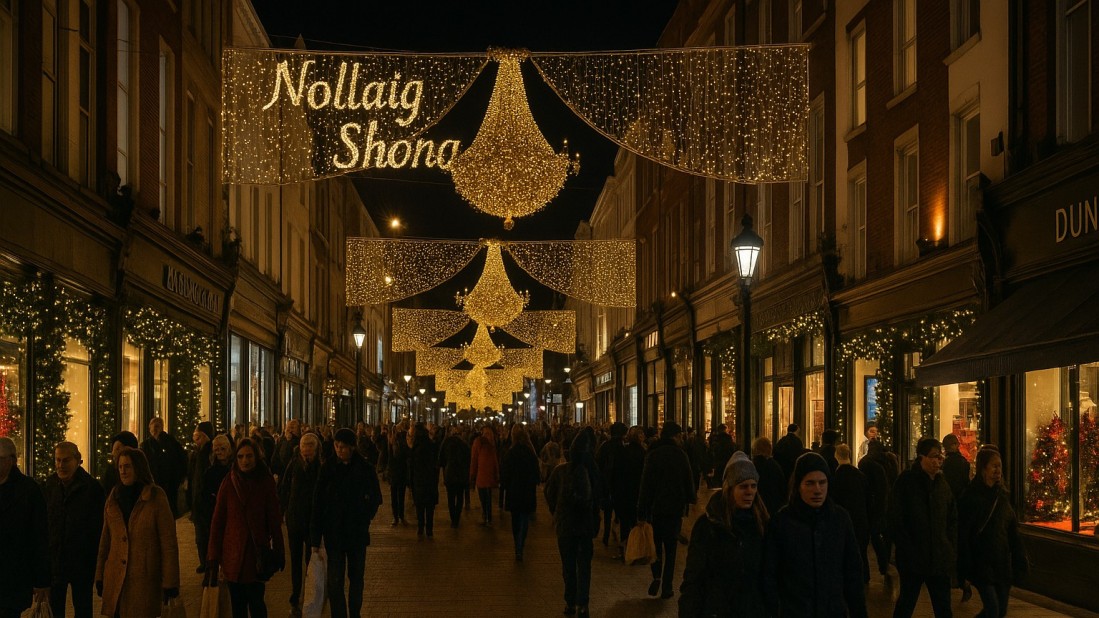
The Christmas tree became popular in Ireland during the 19th century, influenced by European customs. Today, streets in Dublin, Galway, and Cork are illuminated with dazzling Christmas lights, making city centers magical destinations during the holiday season.

Santa Claus in Irish

Santa Claus, known in Irish as Daidí na Nollag (Father of Christmas), is fondly called “Santy” across the Republic of Ireland and Northern Ireland. Children hang stockings on Christmas Eve, eagerly awaiting gifts delivered by Santy. In many Irish households, families leave out a mince pie and a glass of Guinness (instead of milk) for Santy, along with a carrot for his reindeer. This playful adaptation reflects the Irish sense of humor and hospitality.

Christmas Candle

One of the most symbolic traditions of Christmas in Ireland is placing a lighted candle in the window on Christmas Eve. This custom, which dates back centuries, is said to welcome Mary and Joseph as they searched for shelter before the birth of Christ. It also serves as a sign of hospitality, showing that the family is offering warmth and light to travelers or strangers.

In earlier centuries, only the youngest daughter of the household could light the candle, which would then burn through the night. Today, many Irish families continue this practice, honoring their faith and heritage with this small but meaningful gesture.

The Christmas Swim

On Christmas morning, thousands of brave souls across Ireland take part in the Christmas Swim, diving into the icy waters of the Atlantic or Irish Sea. Popular spots include the Forty Foot in Dublin, Salthill in Galway, and Sandycove in Cork. While the swim might seem daunting, it’s a charitable event, with participants often raising funds for local causes. This tradition brings communities together, showcasing Irish endurance and festive spirit.

Irish Christmas traditional dinner

Food plays a central role in Christmas in Ireland. The traditional Irish Christmas dinner typically includes roast turkey or goose, ham, stuffing, roast potatoes, Brussels sprouts, and gravy. For dessert, Christmas pudding (a rich fruitcake soaked in whiskey or brandy) is served, often set aflame before being enjoyed with cream or custard. Mince pies and rich fruitcake are staples throughout the season.

Another beloved treat is the Christmas cake, decorated with icing and marzipan, usually prepared weeks in advance. Whiskey or stout is often added during baking, reflecting Ireland’s love of hearty flavors. Sharing food and drink is central to Christmas in Ireland, with every meal becoming an expression of family and community.

December 26th, After Christmas Day

The day after Christmas in Ireland is known as St. Stephen’s Day (December 26). Traditionally, it was marked by the custom of the wren boys, groups of children who dressed in straw costumes, carried a caged wren, and went door-to-door singing songs in exchange for money or food. The money collected was used for a community feast called the “wren party.”

Although the practice of hunting wrens has faded, modern “Wren Day” festivals still occur in parts of Kerry and other regions, celebrating with music, parades, and traditional dress.

Homecoming

Christmas in Ireland is synonymous with homecoming. Adult children traditionally return home on Christmas Eve, and for many Irish emigrants, the holiday is the most important time to reconnect with family. In the past, Irish immigrants to the U.S. or the U.K. would send gifts or money home, often referred to as the “American letter.” This tradition reflects both the sacrifices of emigration and the enduring ties of family.


Christmas shopping in Ireland

In the mid-20th century, the biggest Christmas shopping day in Ireland was December 8th, the Feast of the Immaculate Conception. On this day, schools closed, and families from rural areas traveled to cities to shop for gifts, decorations, and holiday supplies. Stores like Clerys in Dublin famously offered train ticket refunds for customers who spent over £5, cementing the day’s importance.

Though the tradition has waned due to online shopping and the rise of Black Friday, December 8th remains a nostalgic reminder of Irish Christmas shopping. Today, markets such as the Galway Christmas Market and Dublin’s George’s Street Arcade attract both locals and tourists looking for handcrafted gifts.


Holiday celebration period

Traditionally, the Irish holiday season lasted from Christmas Day until January 6th (Little Christmas or Nollaig na mBan). January 6th is known as Women’s Christmas, a day when women rested after weeks of preparing holiday meals and festivities. This marked the official close of Christmas in Ireland.

Homes kept decorations up until this date, following the belief that removing them early brought bad luck. Even today, many families in Ireland continue to observe this extended festive season.


Christmas over the Irish media

The Irish love of storytelling, humor, and music shines during Christmas in Ireland through television, radio, and festive songs.

The Late Late Toy Show

Perhaps the most beloved Irish media tradition is The Late Late Toy Show, an annual edition of RTÉ’s Late Late Show that airs at the end of November. Children demonstrate toys, perform skits, and enjoy surprises, while families across Ireland gather to watch. The Toy Show marks the unofficial start of the holiday season and is fondly remembered by generations of Irish children.

Irish Radio

Radio traditions also play a huge part in Christmas in Ireland. Joe Duffy’s walk down Grafton Street in Dublin, broadcast on RTÉ Radio 1 each Christmas Eve, has become iconic. Similarly, Dave Fanning’s “Fanning’s Fab 50” music countdown on RTÉ 2fm has long been a festive favorite.

Since 2008, Christmas FM has become a staple, playing Christmas songs 24/7 throughout December. Its charitable fundraising efforts make it a uniquely Irish addition to the season.

Irish Christmas music

Music fills the air during Christmas in Ireland. From local choirs singing carols on cobblestone streets to modern classics, songs shape the atmosphere of the holiday. “Fairytale of New York” by The Pogues is considered Ireland’s unofficial Christmas anthem. Other popular tunes include “Happy Xmas (War is Over)” and traditional carols like “O Come All Ye Faithful” sung in Irish (Adeste Fideles).

Music brings both nostalgia and joy, creating a festive soundtrack for Christmas in Ireland.


Conclusion

Christmas in Ireland is a celebration of old and new, a blend of religious devotion, cultural tradition, and joyful festivity. From lighting candles in windows to watching the Toy Show and braving the Christmas Swim, every custom tells a story of resilience, faith, and family.

Whether you’re walking along Dublin’s twinkling Grafton Street, enjoying Christmas pudding by the fire, or listening to the familiar strains of Irish carols, one thing is certain: Christmas in Ireland is not just a holiday. It is a living tradition, carried with warmth and pride into each generation.

Birthstones for Each Month: History, Meaning, and Stunning Jewelry

Birthstones for Each Month: History, Meaning, and Stunning Jewelry

Gemstones and Traditions

For centuries, gemstones have been more than beautiful adornments — they have carried symbolic meaning, protective powers, and deep cultural connections. Birthstones for each month are perhaps the most well-known way these precious and semi-precious stones are linked to personal identity. The idea of wearing a gem that corresponds to your birth month stretches back to ancient civilizations, each believing that certain stones held magical or healing properties when worn during their specific month.

Today, birthstones serve both as fashionable statements and as symbols of personal meaning. Whether you wear them for luck, spiritual balance, or pure beauty, birthstones connect you to a timeless tradition while offering a unique, customized touch to your style.


Birthstone Traditions

The concept of birthstones dates back to biblical times, particularly to the Breastplate of Aaron described in the Book of Exodus. This ceremonial garment was said to feature twelve stones representing the twelve tribes of Israel. Over time, scholars connected these stones to the twelve months of the year and the zodiac signs, paving the way for the modern birthstone system.

Through the centuries, interpretations evolved. The Gregorian calendar introduced a standardized version of birthstones for each month in Western culture. Gem trade associations later updated the list in the 20th century to reflect modern gem availability, adding alternative stones for affordability and variety.


Which Birthstone Goes with Each Month?

Before we look at the modern list, it’s worth exploring the Gregorian Birthstone Poem, which gives us one of the earliest widely adopted guides to monthly stones.

Gregorian Birthstone Poem

The Gregorian Birthstone Poem, published in 1870, was a Victorian-era favorite and remains a romantic reference for traditional birthstone meanings.

January

“By her who in January was born
No gem save garnets shall be worn;
They will ensure her constancy,
True friendship, and fidelity.”

Meaning & Lore: Garnet has been associated with protection, friendship, and trust. In history, garnet was carried by travelers for safe passage.

February

“The February-born shall find
Sincerity and peace of mind,
Freedom from passion and from care,
If they the amethyst will wear.”

Meaning & Lore: Amethyst symbolizes clarity, peace, and sobriety. Ancient Greeks believed it could protect against intoxication.

March

“Who in this world of ours their eyes
In March on aquamarine shall prize,
Are from affection’s bonds as free
As fish that swim the mighty sea.”

Meaning & Lore: Aquamarine has long been the sailor’s talisman for safe voyages, representing calm seas and tranquility.

April

“She who from April dates her years,
Diamonds shall wear, lest bitter tears
For vain repentance flow; this stone,
Emblem of innocence, is known.”

Meaning & Lore: Diamonds are symbols of purity, strength, and everlasting love — a favorite for engagement rings.

May

“Who first beholds the light of day
In spring’s sweet flowery month of May
And wears an emerald all her life
Shall be a loved and happy wife.”

Meaning & Lore: Emeralds are symbols of renewal, fertility, and love — beloved by royalty throughout history.

June

“Who comes with summer to this earth
And owes to June her day of birth,
With ring of agate on her hand
Can health, wealth, and long life command.”

Meaning & Lore: The poem mentions agate, but modern traditions celebrate pearl, moonstone, and alexandrite for June.

July

“The glowing ruby shall adorn
Those who in July are born;
Then they’ll be exempt and free
From love’s doubts and anxiety.”

Meaning & Lore: Ruby is the king of precious stones, symbolizing passion, vitality, and love.

August

“Wear a sardonyx or for thee
No conjugal fidelity;
The August-born without this stone,
‘Tis said, must live unloved, alone.”

Meaning & Lore: Modern August stones also include peridot, spinel, and onyx.

September

“A maiden born when autumn leaves
Are rustling in September’s breeze,
A sapphire on her brow should bind;
‘Twill cure diseases of the mind.”

Meaning & Lore: Sapphire represents wisdom, virtue, and serenity.

October

“October’s child is born for woe,
And life’s vicissitudes must know;
But lay an opal on her breast,
And hope will lull those foes to rest.”

Meaning & Lore: Opal is famed for inspiring creativity and protecting the wearer from harm.

November

“Who first comes to this world below
With drear November’s fog and snow
Should prize the topaz amber hue —
Emblem of friends and lovers true.”

Meaning & Lore: Topaz and citrine are both known for bringing warmth and optimism.

December

“If cold December gave you birth,
The month of snow and ice and mirth,
Place on your hand a turquoise blue,
Success will bless whate’er you do.”

Meaning & Lore: Turquoise, tanzanite, and zircon bring protection and good fortune.


Modern Birthstones for Each Month

The modern list was standardized by the American National Retail Jewelers Association (now Jewelers of America) in 1912, with updates since to include additional stones.

January Birthstone: Garnet

Rich red garnet symbolizes trust and safe travel. It has been prized since ancient Egypt and Rome for its deep, glowing beauty.

February Birthstone: Amethyst

This regal purple gem was once as valuable as sapphire and ruby, representing clarity, calmness, and royalty.

March Birthstone: Aquamarine

Pale blue aquamarine evokes the sea, bringing peace, courage, and clarity to its wearer.

April Birthstone: Diamond

Diamonds are the ultimate symbol of everlasting love, making them timeless favorites for engagement rings.

May Birthstone: Emerald

Vibrant green emeralds are symbols of hope, growth, and renewal — perfect for the heart of spring.

June Birthstones:

  • Pearl: Classic and elegant, pearls represent purity and timeless style.
  • Moonstone: Shimmering moonstone is linked to love, intuition, and protection.
  • Alexandrite: A rare stone that changes color, alexandrite symbolizes adaptability and joy.

July Birthstone: Ruby

Rubies are associated with love, courage, and passion, treasured for their intense red hue.

August Birthstone:

Peridot

Bright green peridot is believed to bring protection and prosperity.

Spinel

Available in various colors, spinel represents energy and revitalization.

Onyx

Onyx offers grounding energy and strength.

September Birthstone: Sapphire

Known for its deep blue, sapphire represents wisdom, loyalty, and protection.

October Birthstone: Opal

Opals display a kaleidoscope of colors, symbolizing creativity and inspiration.

November Birthstone: Citrine & Topaz

Citrine shines with golden warmth, while topaz offers protection and positive energy.

December Birthstone: Turquoise, Tanzanite, & Zircon

These blue-toned stones are symbols of peace, protection, and prosperity.


Birthstone Jewelry

From the ancient breastplates of high priests to today’s elegant necklaces and rings, birthstones have always been a way to wear beauty with meaning. Wearing your birthstone connects you to centuries of tradition and adds a personal touch to your style.

Whether you want to honor your own month, celebrate a loved one, or simply enjoy the beauty of a gem, you’ll find something extraordinary in our birthstone jewelry collection.


About Us

The Irish Jewelry Company brings together heritage and craftsmanship, creating meaningful pieces inspired by Irish culture and timeless beauty.

Our Jewelry

From Claddagh rings to gemstone pendants, each design is crafted with care and storytelling at its heart.

Customer Care

We pride ourselves on exceptional customer service, ensuring your shopping experience is as sparkling as your jewelry.

From Positano to Capri – Italian Jewelry Looks for August Getaways

Italian Summer Style – Jewelry Inspired by the Amalfi Coast

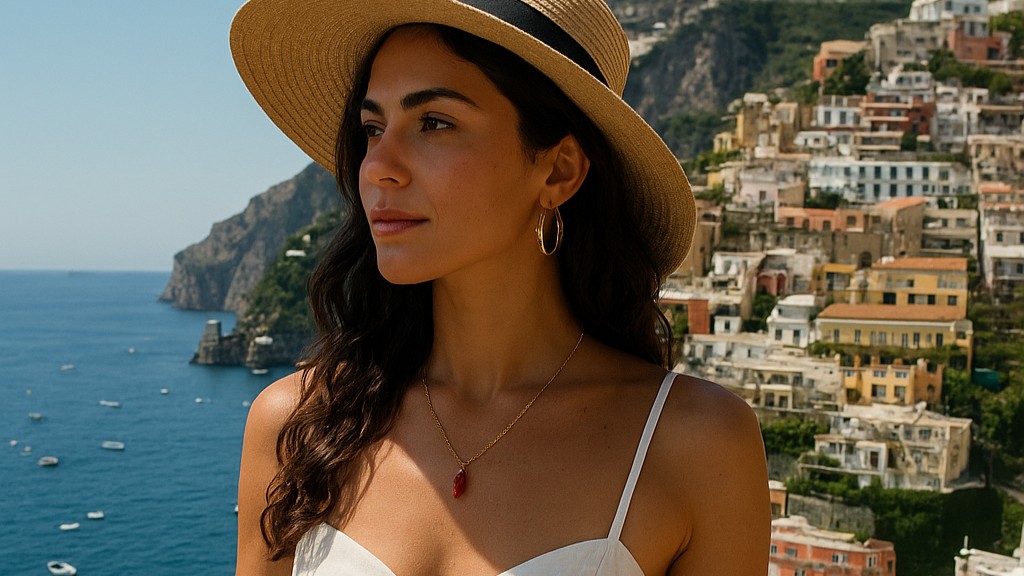
Imagine the sun glistening on turquoise waters, pastel-hued villages cascading down dramatic cliffs, and the scent of lemon groves drifting through the warm breeze. This is the Amalfi Coast—a place where effortless elegance meets vibrant coastal charm. And when it comes to style, the Amalfi Coast has its own fashion language: sun-kissed skin, flowing linen, chic sandals, and, of course, jewelry that makes a statement without trying too hard.

Whether you’re strolling through the winding streets of Positano, dining seaside in Amalfi, or sipping limoncello in Capri, your jewelry should feel as naturally glamorous as the view. Let’s explore how to bring the Italian summer style home—no passport required.


1. Gold Hoops – The Quintessential Italian Summer Earring

Nothing says la dolce vita like a pair of gleaming gold hoop earrings. On the Amalfi Coast, women often pair oversized hoops with breezy sundresses and wide-brimmed hats. The warm glow of gold complements sun-kissed skin beautifully, making it a vacation essential.

Style Tip:
Wear thin, large hoops for daytime markets and beach walks; opt for bold, textured hoops for an evening aperitivo.


2. Coral Jewelry – A Splash of Mediterranean Tradition

Italian red coral jewelry is more than just a style choice’s a tradition steeped in symbolism. Believed to bring protection and good fortune, coral has been worn for centuries along the southern Italian coast. The vibrant red hue echoes the Amalfi sunsets and the colorful fishing boats bobbing in the harbors.

Style Tip:
Pair a red coral necklace with a white linen dress for a crisp, striking contrast, or layer coral bead bracelets with gold bangles for a chic, beachy look.


3. Lemon-Themed Pieces – Wear the Symbol of Amalfi

If there’s one fruit that defines the Amalfi Coast, it’s the lemon, specifically, the sweet and fragrant sfusato amalfitano. Jewelry inspired by Amalfi lemons brings a playful, sunny element to your summer wardrobe. From delicate lemon-shaped charms to enamel lemon pendants, these pieces are a conversation starter.

Style Tip:
Mix lemon charms with gold chains for a whimsical layered look. Perfect for casual lunches or seaside shopping.


4. Pastel Horn Charms – Carry the Colors of Summer With You

Positano Cornicello Pastello Charm Necklace is quintessential for channeling Mediterranean coastal energy. Italian horn jewelry keeps the evil away, even when you’re on vacation.

Style Tip:
Wear a simple Italian choker necklace layered with a Positano Cornicello Pastello Charm Necklace for a sophisticated twist on summer style.


5. Bringing Amalfi Coast Jewelry into Your Everyday Style

The beauty of Amalfi-inspired jewelry is that it transitions effortlessly from vacation to everyday wear. The key is mixing statement pieces with minimal classics—a bold coral necklace with a simple gold bracelet, or lemon-themed studs with sleek hoop earrings.

And remember, Italian summer style isn’t just about what you wear—it’s about how you wear it: confidently, effortlessly, and with a touch of joy.


Shop the Amalfi Coast Look

Bring the sunshine home with our curated selection of gold hoops, coral jewelry, lemon charms, and nautical pieces—all designed to capture the magic of an Italian summer.

Explore the Collection → https://www.theitalianjewelrycompany.com

Puca – The Shape-Shifting Spirit of Celtic Folklore

Puca – The Shape-Shifting Spirit of Celtic Folklore

The Puca, sometimes spelled púca, pooka, puck, or pwca, is one of the most fascinating and mysterious creatures in Celtic mythology. Known for its ability to shape-shift, this mischievous yet sometimes helpful spirit has roamed the hills, coasts, and forests of Ireland, the British Isles, and even the Channel Islands for centuries.

The Puca can be a bringer of blessings or chaos, depending on its mood. In one story, it’s a friendly guide offering safe passage. In another, it’s a terrifying phantom that whisks you away on a midnight ride. Whether feared or revered, the Puca remains a cornerstone of Irish and British folklore, and its legacy continues to inspire storytellers, artists, and festival-goers today.


Origins of the Puca and Its Many Names

The name “púca” comes from the Irish word meaning “spirit” or “ghost.” Over time, this folkloric being has been known by many names:

  • Pooka – Common in English-language Irish folklore
  • Puck – Known from English tradition, famously immortalized by Shakespeare in A Midsummer Night’s Dream
  • Pwca – A Welsh variation
  • Pouque – Used in the Channel Islands
  • Puca – The modern anglicized spelling

Despite the variations, all these names describe a supernatural entity that blurs the line between benevolence and malevolence.


The Nature and Powers of the Puca

Puca powers are the heart of its legend. Known as one of the most versatile shape-shifters in Celtic mythology, the Puca can take many forms—some alluring, others terrifying. Its transformations include:

  • Púca rabbit – A sleek black or white hare that appears suddenly on moonlit roads.
  • Púca cat – A mysterious feline with burning eyes, sometimes as large as a panther.
  • Puca man – A tall figure with animal ears or glowing eyes, blending human and beast.
  • Puca goblin – Mischievous, small, and quick, playing pranks on travelers.
  • Horses, goats, dogs, and even birds.

In most tales, the Puca is nocturnal, appearing after twilight to either help or hinder those it encounters.


The Puca’s Appearance and Color

Descriptions of the Puca vary by region and storyteller. Sometimes it’s an inky black creature with glowing yellow eyes; in other traditions, it appears in brilliant white. These Puca colors often symbolize its nature at the time, white for benevolence, black for trickery or danger.

Its most common features include:

  • Glossy, dark, or white fur or hair
  • Long, sharp ears
  • Gleaming, intelligent eyes
  • A mysterious, almost magnetic presence

When in Puca man form, it’s often said to wear ragged clothes and possess an unsettling, otherworldly beauty.


The Dual Nature of the Puca – Good Fortune and Mischief

What makes the Puca so intriguing is its unpredictable nature. Unlike purely evil spirits or benevolent fairies, the Puca embodies both light and dark qualities.

Helpful Puca Tales

  • Guiding lost travelers home at night
  • Warning farmers of coming storms
  • Blessing crops with abundant harvests
  • Offering wisdom or cryptic advice

Mischievous or Malevolent Puca Tales

  • Taking riders on wild midnight journeys through dangerous terrain
  • Leading people astray into bogs or cliffs
  • Frightening livestock or spoiling milk
  • Playing tricks that leave humans shaken but unharmed

This balance of traits mirrors the natural world, beautiful and bountiful, yet unpredictable and dangerous.


Folklore and Harvest Time – The Puca’s Seasonal Connection

In many Irish traditions, the Puca is linked to Samhain (Halloween) and the harvest season. It was believed that after the crops were harvested, the Puca would roam the fields at night, blessing or cursing the remaining produce. Farmers often left a portion of the harvest, known as the “Puca’s share,” to appease it.

Even today, the Púca Festival in Ireland celebrates this folklore with music, storytelling, and costumed performances honoring the spirit’s wild nature.


Puca in Literature and Pop Culture

The Puca has left its hoofprints (and pawprints) across centuries of literature and art.

  • In Shakespeare’s Puck, the trickster fairy from A Midsummer Night’s Dream, we see echoes of the Irish Puca.
  • In modern fantasy, the Puca often appears as a shape-shifting guide or antagonist.
  • Local legends still inspire children’s stories, Halloween events, and even video games.

Its adaptability as a myth mirrors its shape-shifting powers—it can fit into any era’s storytelling.


Regional Variations of the Puca

Different areas have unique interpretations of the Puca:

  • Irish Puca – Both feared and respected; often associated with wild, rural places.
  • Welsh Pwca – More of a household spirit, offering blessings in exchange for respect.
  • English Puck – More playful and theatrical, a bringer of mild chaos.
  • Channel Islands Pouque – A reclusive spirit living in remote landscapes.

Puca Pronunciation and Language Notes

In Irish, Púca pronunciation is roughly “POO-ka.” In Welsh, “Pwca” is pronounced “POO-ka” as well. The English “Puck” shortens and alters the sound, but all trace back to similar linguistic roots meaning “spirit” or “ghost.”


People Also Ask – Puca FAQs

What is an Irish Puca?

An Irish Puca is a supernatural shape-shifter from Celtic folklore, capable of bringing good or bad fortune depending on its mood and form.

What is the meaning of Puca?

The word “Puca” comes from the Irish for “spirit” or “ghost,” symbolizing a mystical being with unpredictable behavior.

Is a Puca a fairy?

Yes, in many traditions, the Puca is considered part of the fairy realm, though it’s wilder and less predictable than most household fairies.

What does a Púca look like?

A Puca may appear as a black or white horse, goat, hare, cat, goblin, or even a human with animal traits. Its Puca color often hints at its intentions.

Get in Touch

At The Irish Jewelry Company, we love sharing the rich stories, myths, and traditions of Ireland, from the Puca of Celtic folklore to the symbols you can wear every day. If you have questions about Irish mythology, want to share your own Puca stories, or are looking for unique Celtic jewelry inspired by Ireland’s legends, we’d love to hear from you.

Follow us on Social Media:

Whether you’re captivated by the mysterious Puca or simply want to connect with Irish heritage, we’re here to help you find the perfect piece of jewelry or the perfect story to tell.

Italian Micro Mosaic Jewelry: History, Craftsmanship, and Collecting Guide

The Timeless Beauty of Italian Micro Mosaic Jewelry: A Complete Guide

Italian micro mosaic jewelry is among the most exquisite forms of wearable art ever produced. With roots tracing back to the grandeur of Italian architecture and artistic heritage, these miniature masterpieces are crafted using tesserae tiny pieces of colored glass or enamel—meticulously arranged into intricate patterns or images.

From its origins in the workshops of Florence and Rome to its popularity with modern collectors, micro mosaic jewelry has retained a sense of timeless beauty and craftsmanship that is as captivating today as it was over two centuries ago.


What Is Micro Mosaic Jewelry?

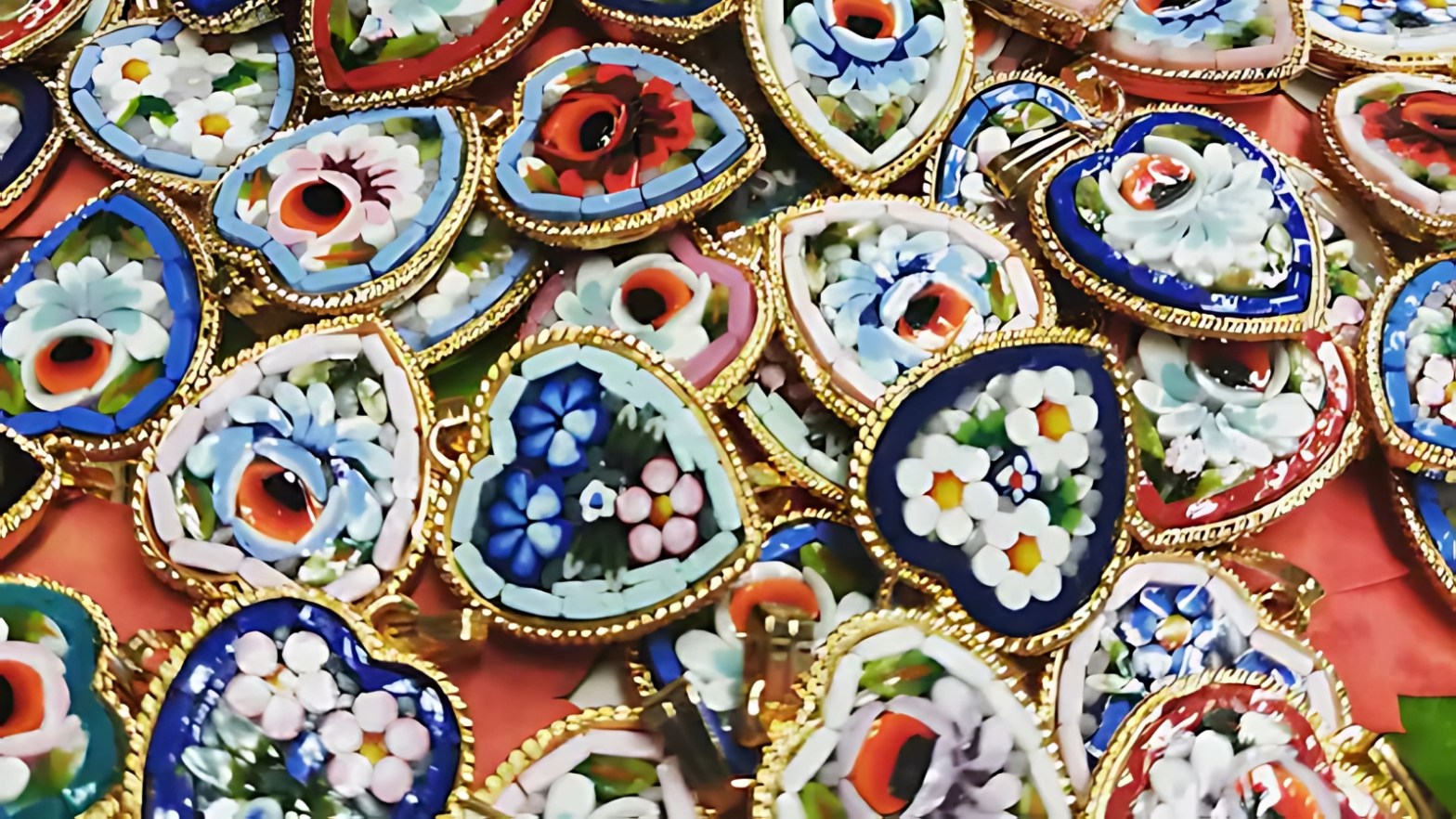
Micro mosaic jewelry refers to miniature mosaics small enough to wear, set into brooches, pendants, earrings, bracelets, or rings. Each design is composed of hundreds or even thousands of tiny tesserae, so small that from a distance, they often resemble painted images.

The appeal lies in the incredible attention to detail, the vibrancy of the colors, and the sheer artistry required to arrange the tesserae by hand. Italian micro mosaic jewelry is instantly recognizable for its precision, use of rich colors, and themes ranging from pastoral landscapes to intricate floral bouquets.


The Origins of Italian Micro Mosaic Jewelry

The art of micro mosaic jewelry originated in late 18th-century Italy, a period when wealthy Europeans embarked on the Grand Tour, a cultural journey across Europe that often ended in Italy. Visitors marveled at ancient Roman and Renaissance art, and many desired a tangible memento to take home.

From Architecture to Jewelry

Skilled artisans who had previously worked on large-scale architectural mosaics began adapting their craft to create smaller, more portable souvenirs. The shift from monumental church domes to wearable pendants required incredible skill, as tesserae were scaled down dramatically to fit into gold or silver settings.


Florence: A Center for Micro Mosaic Artistry

While Rome played a key role, Florence became a major center for Italian micro mosaic jewelry, blending the region’s traditions of fine goldsmithing with its reputation for precision inlay work. The city was already famous for pietra dura, a similar art form that used semi-precious stones instead of glass.

Italian Florentine micro mosaic jewelry became a signature style, often characterized by:

  • Floral sprays with remarkable color gradients.
  • Religious motifs and saints, particularly popular for pendants.
  • Depictions of Tuscan landmarks and Renaissance architecture.

The Italian Florentine micro mosaic jewelry pendant remains one of the most sought-after designs for collectors worldwide.


Rossano Micro Mosaic Jewelry

One of the most respected contemporary makers is Rossano micro mosaic jewelry. This brand preserves the traditions of handcrafting while experimenting with modern motifs and settings. Rossano’s work stands out for:

  • Ultra-fine tesserae that mimic the softness of painted brushstrokes.
  • Luxurious gold or sterling silver frames.
  • Themes inspired by both ancient Rome and modern Italy.

Collectors consider Rossano among the best sources for authentic Italian micro mosaic jewelry today.


Key Characteristics of Micro Mosaic Jewelry

  1. Tiny Tesserae – Often smaller than a millimeter, these fragments allow for lifelike detail.
  2. Intricate Designs – From pastoral landscapes to religious iconography, the range is vast.
  3. Handmade Craftsmanship – No two pieces are ever exactly the same.
  4. Metal Settings – Antique pieces often use gold or silver; vintage designs may feature gold-plated brass.
  5. Variety of Forms – Brooches, pendants, bracelets, and earrings. The Italian micro mosaic bracelet remains a collector’s favorite.

Antique Micro Mosaic Jewelry

Antique micro mosaic jewelry pieces over 100 years old tend to have:

  • Exceptionally fine tesserae with almost invisible gaps.
  • Motifs featuring Roman ruins, the Vatican, or intricate floral arrangements.
  • Precious metal settings, often with Italian gold hallmarks.

These antique treasures are among the most valuable in the micro mosaic category, especially if they remain in pristine condition.


Vintage Italian Micro Mosaic Jewelry

Vintage Italian micro mosaic jewelry generally refers to pieces from the 1920s through the 1970s. These designs often feature larger tesserae and bolder color contrasts, reflecting mid-century tastes. While less intricate than antique versions, vintage pieces are still highly collectible and more affordable for new enthusiasts.


How to Date Italian Micro Mosaic Jewelry

Dating a piece requires examining several factors:

  • Tesserae size – The smaller and more uniform, the older and more valuable.
  • Subject matter – Earlier works favored classical and religious themes; later ones used floral and playful motifs.
  • Metal type – Older pieces often used higher karat gold.
  • Back and clasp styles – Antique clasps differ from modern ones.

Learning how to date Italian micro mosaic jewelry is essential for identifying authentic antiques versus reproductions.


How to Make Micro Mosaic Jewelry

The process of creating micro mosaic jewelry has changed little over two centuries:

  1. Design creation – The artist plans the image.
  2. Glass preparation – Long glass canes are cut into tiny segments.
  3. Placement – Using tweezers, each tessera is set into a soft adhesive within the jewelry frame.
  4. Finishing – Once hardened, the piece is polished for a smooth, even surface.

For artisans, learning how to make micro mosaic jewelry can take years of practice.


Micro Mosaic vs. Pietra Dura

Both are Italian decorative arts, but:

  • Micro mosaic jewelry uses tiny glass tesserae.
  • Pietra dura uses precisely cut semi-precious stones.

The difference lies in both materials and the final appearance of glass offers more vivid color possibilities.


Standard Mosaic Tile Size vs. Micro Mosaic

A standard mosaic tile can be over an inch across, but the tesserae in micro mosaic jewelry are so small they may measure under one millimeter. This extreme miniaturization is what allows for painting-like detail.


People Also Ask

What is Italian micro mosaic?
Miniature mosaics made from tiny colored glass pieces, crafted into wearable art in Italy.

How to date Italian micro mosaic jewelry?
Look for fine tesserae, older clasp styles, and traditional motifs.

What is the difference between micromosaic and pietra dura?
Micro mosaics use glass; pietra dura uses stone.


Vintage Micro Mosaic Jewelry for Sale at The Italian Jewelry Company

At The Italian Jewelry Company, we curate a collection of authentic vintage micro mosaic jewelry sourced directly from Italy. Each piece—whether a bracelet, brooch, or pendant—is a conversation starter and a wearable piece of history. Browse our selection here. https://www.theitalianjewelrycompany.com/collections/micro-mosaics.html


When Did Micro Mosaic Come Out?

The earliest micro mosaic jewelry dates to the late 1700s, reaching peak popularity in the 19th century. It was especially popular during the Victorian era, when sentimental and souvenir jewelry was in fashion.


Collecting Italian Micro Mosaic Jewelry

For serious collectors:

  • Seek antique pieces with the finest tesserae.
  • Look for well-preserved settings in original condition.
  • Keep documentation if possible; provenance increases value.

Caring for Micro Mosaic Jewelry

To protect your Italian micro mosaic jewelry:

  • Avoid water and harsh cleaning chemicals.
  • Store separately to prevent scratches.
  • Have repairs done only by specialists familiar with mosaic work.

Why Micro Mosaic Jewelry Is Worth Owning

Each piece of Italian micro mosaic jewelry represents:

  • Hours, sometimes days, of meticulous work.
  • Centuries of Italian artistic tradition.
  • A tangible connection to the cultural history of Italy.

For lovers of art, history, and fine craftsmanship, owning micro mosaic jewelry is like holding a fragment of Italy in your hand.

The Tree of Life Meaning, Symbolism, and Influence

Tree of Life Meaning, Symbolism, and Influence

The Tree of Life is one of the most enduring symbols across human history, appearing in art, religion, mythology, and even jewelry design for thousands of years. Whether carved into ancient stone, painted onto sacred manuscripts, or delicately crafted into fine gold pendants, the Tree of Life has always represented connection, growth, and the eternal cycles of existence.

Its beauty lies not only in its striking visual form, a strong trunk, deep-reaching roots, and wide-branching canopy, but also in the layers of meaning it holds for different cultures. Today, the Tree of Life continues to inspire spirituality, creativity, and personal expression, often worn as a symbol of unity and resilience.

If you’re drawn to this timeless motif, you’ll find an exquisite selection of designs in The Irish Jewelry Company’s Tree of Life Jewelry Collection. Each piece celebrates the artistry and deep meaning behind the Tree of Life while allowing you to carry this powerful symbol with you every day.


All About the Tree of Life

The Tree of Life has been revered for millennia, appearing in cultures from ancient Egypt to Celtic Ireland. At its core, it represents the connection between heaven and earth, life and afterlife, the seen and unseen.

  • Roots: Symbolize our origins—family, culture, and ancestry.
  • Trunk: Represents strength, stability, and the journey of life.
  • Branches: Signify growth, expansion, and reaching toward the divine.
  • Leaves and Fruit: Reflect renewal, abundance, and the rewards of life’s journey.

For many, the Tree of Life is also a reminder of personal growth, how, like a tree, we develop over time, gaining wisdom through seasons of change. This is why it’s not only a spiritual symbol but also a popular gift for milestones like graduations, weddings, and anniversaries.

For a deeper dive into its origins and significance, see Discovering the Magic of the Tree of Life in Nature and Spirituality.


Tree of Life Symbolism by Culture

Across continents and centuries, the Tree of Life has carried meanings unique to each culture, while still sharing a universal sense of unity and renewal.

Kabbalah Tree of Life

In Jewish mysticism, the Kabbalah Tree of Life is a symbolic diagram representing the path to spiritual enlightenment. Comprising ten interconnected nodes called sefirot, it outlines how divine energy flows into the world and into human souls. Here, the Tree of Life serves as both a map of the universe and a guide for spiritual growth.

Celtic Tree of Life

The Celtic Tree of Life (Crann Bethadh) holds a special place in Irish heritage. Celts viewed trees as ancestors and gatekeepers to other worlds. The circular form branches reaching upward and roots extending downward symbolize the link between heaven and earth, day and night, life and death. This design is deeply ingrained in Irish art, from ancient stone carvings to modern Celtic jewelry, making it one of the most recognized interpretations of the Tree of Life.

Many modern Irish designs feature intricate knotwork woven into the branches, highlighting eternal life and interconnectedness motifs beautifully captured in The Irish Jewelry Company’s Tree of Life Jewelry Collection.

Chakra Tree of Life

In energy healing traditions, the Chakra Tree of Life aligns the tree’s form with the seven main chakras of the body. Each branch or section of the tree corresponds to an energy center, promoting balance, health, and spiritual alignment. Jewelry featuring gemstone “fruits” for each chakra is particularly popular for those seeking harmony in mind, body, and spirit.

Nordic Tree of Life

The Nordic Tree of Life, known as Yggdrasil, was central to Norse mythology. This immense ash tree connected the nine realms of existence, from the world of gods to the realm of the dead. Yggdrasil’s roots and branches were said to stretch across the cosmos, embodying both the fragility and resilience of life.

Chinese Mythology

In Chinese tradition, the Tree of Life often bears peaches of immortality, symbolizing long life and divine favor. It appears in Taoist art as a bridge between the earthly realm and the heavens, reinforcing the belief that harmony with nature leads to spiritual fulfillment.

Hindu Tree of Life

In Hinduism, the Tree of Life is seen as the Kalpavriksha, a wish-fulfilling divine tree that grants blessings. It represents the endless cycle of creation, preservation, and destruction, mirroring the cycles of life and reincarnation.


Tree of Life Spiritual Meaning

Spiritually, the Tree of Life serves as a metaphor for personal growth and the human journey. Its deep roots ground us in our heritage, while its ever-reaching branches remind us to aspire toward wisdom, compassion, and self-realization.

In many belief systems, the Tree of Life also represents:

  • Unity: A reminder that all forms of life are interconnected.
  • Eternity: Through the cyclical nature of seasons, death gives way to rebirth.
  • Balance: Harmony between the physical and spiritual worlds.

People often wear Tree of Life jewelry not only for its beauty but also as a personal talisman of strength, protection, and renewal.


Tree of Life Inspiration for Art

Throughout history, artists have been captivated by the Tree of Life. Gustav Klimt famously depicted it in his iconic painting The Tree of Life, combining symbolism with the elegance of Art Nouveau. Modern designers, too, are inspired by its symmetry and universal message, bringing it into mediums as diverse as sculpture, embroidery, and fine jewelry.

Tree of Life Jewelry

Tree of Life jewelry has become one of the most beloved ways to keep this symbol close. From delicate silver pendants to bold gold statement pieces, each design carries the same universal meaning while allowing for personal interpretation. Wearing such a piece can serve as a daily reminder of growth, resilience, and connection.

The Tree of Life Jewelry Collection offers designs that combine traditional Celtic artistry with modern elegance, perfect for marking life’s milestones or simply celebrating your own journey.


Decorating with Tree of Life Symbolism

The Tree of Life also holds a special place in home décor. Wall hangings, tapestries, and metal art featuring this design can bring a sense of harmony and grounding to a space. Its symmetrical form is pleasing to the eye, while its meaning enriches the environment with symbolism of unity, growth, and protection.


The Tree of Life Symbol

Tree of Life Design

The design of the Tree of Life typically features a central trunk with branches and roots arranged within a circle, emphasizing wholeness and the cycle of life. Variations may include intricate knotwork, gemstone accents, or stylized leaves, making each interpretation unique.

History of the Tree of Life

Evidence of the Tree of Life motif dates back thousands of years from Mesopotamian carvings to Egyptian papyri, from Viking runestones to medieval Celtic manuscripts. Its persistence across cultures demonstrates how deeply this symbol resonates with humanity’s search for meaning.

Meaning of the Tree of Life

There are multiple interpretations of the Tree of Life symbol, but its most popular associations include connection and unity. The evolution and depth of this design are multi-layered:

  • Connection: Roots reach deep into the earth while branches stretch toward the sky, linking the two realms.
  • Strength: Trees stand firm through storms, symbolizing stability.
  • Growth: Like a tree, humans grow continuously in knowledge and experience.
  • Rebirth: Seasonal cycles mirror life’s changes and renewal.
  • Family: The branching form reflects family lineage and ancestry.
  • Tranquillity: Trees offer shelter and peace, much like nature itself.

People Also Ask:

What does the Bible say about a Tree of Life?
In the Bible, the Tree of Life appears in the Book of Genesis as a source of eternal life in the Garden of Eden. It reappears in Revelation, symbolizing God’s gift of everlasting life to the faithful.

Is it good to wear a Tree of Life?
Yes, many believe wearing a Tree of Life offers protection, promotes positive energy, and serves as a personal reminder of resilience and connection.

What is the moral of the Tree of Life?
The moral is that life is interconnected and ever-changing. Just like a tree, we must stay rooted while continuing to grow.

What is the spiritual meaning of the Tree?
Spiritually, the Tree of Life embodies harmony, eternal life, and the link between the physical and spiritual realms.


About The Irish Jewelry Company

At The Irish Jewelry Company, we honor the timeless Tree of Life by crafting jewelry that blends traditional meaning with modern design. Each piece is a work of art, celebrating connection, strength, and the beauty of life’s journey.

The Irish Jewelry Company: The Original Online Claddagh Store with the Largest Selection of Claddagh Rings Now Offers More Ways to Pay

FOR IMMEDIATE RELEASE

New York – August 9, 2025

The Irish Jewelry Company: The Original Online Claddagh Store with the Largest Selection of Claddagh Rings Now Offers More Ways to Pay

New York, NY – For over two decades, The Irish Jewelry Company has been recognized as the original online Claddagh store and the best place to buy a Claddagh ring online. With the largest selection of Claddagh rings anywhere on the internet, the company continues to set the gold standard for authenticity, quality, and customer service. Now, shopping for an authentic Claddagh ring is even easier, thanks to expanded payment options including Google Pay, Venmo, Amazon Pay, PayPal, and all major credit cards.

Whether customers are searching for the best place to buy a Claddagh ring from Ireland, a gold Claddagh ring, or want to buy a Claddagh ring near me, The Irish Jewelry Company delivers unmatched variety and quality, shipped worldwide from the USA, with many styles made in Ireland and hallmarked by The Irish Assay Office in Dublin Castle.


Why Buy a Claddagh Ring from The Irish Jewelry Company?

  • Authenticity Guaranteed – Many rings are made in Ireland and bear the hallmark stamp of The Irish Assay Office in Dublin Castle, ensuring genuine Irish craftsmanship.
  • Largest Selection Online – From gold Claddagh rings and silver Claddagh rings to men’s Claddagh styles, gemstone-accented rings, and modern designs.
  • Symbolism and Meaning – Every Claddagh ring represents love (heart), loyalty (crown), and friendship (hands). Whether you’re buying for yourself or a loved one, each ring tells a story.
  • Guidance on How to Wear a Claddagh Ring – Detailed resources explain the traditional way to wear your ring depending on your relationship status.
  • More Ways to Pay – Shop confidently with Google Pay, Venmo, Amazon Pay, PayPal, and all major credit cards.
  • Worldwide Shipping – Whether you want to buy a Claddagh ring from Galway, Dublin, or anywhere in Ireland, The Irish Jewelry Company makes it possible to get it delivered to your door.

Things to Consider When Buying a Claddagh Ring

  1. Authenticity: Look for the hallmark stamp if you want a ring made in Ireland.
  2. Material: Choose from sterling silver, 10K, 14K, or 18K gold, with or without gemstones or birthstones.
  3. Design: Select a traditional style or a modern interpretation that reflects your personality.
  4. Symbolism: Decide what message you want your Claddagh ring to convey.
  5. Price: Consider material, craftsmanship, and design when setting your budget.

About the Claddagh Ring

The Claddagh ring is one of the most iconic symbols of Ireland. Originating in the 17th century in the fishing village of Claddagh, Galway, its design represents deep-rooted Irish traditions. The way the ring is worn carries meaning. Worn on the right hand with the heart facing out shows you are single, while worn with the heart facing in shows you are taken. On the left hand, heart inward, it symbolizes marriage.


“For anyone wondering where to buy a Claddagh ring online or where to buy a Claddagh ring in Ireland, our store is the trusted choice for thousands of customers worldwide,” said a spokesperson for The Irish Jewelry Company. “We’re proud to make the tradition of the Claddagh accessible to everyone, no matter where they are.”


About The Irish Jewelry Company

Founded in New York, The Irish Jewelry Company is the leading online destination for authentic Irish jewelry, specializing in Claddagh rings, Celtic wedding bands, and meaningful Irish gifts. Known as the original online Claddagh store, it offers the largest selection of Claddagh rings in gold and silver, with worldwide shipping and superior customer service backed by an impeccable on-time shipping record.

Website: https://www.theirishjewelrycompany.com
Press Contact:
The Irish Jewelry Company
Email: info@theirishjewelrycompany.com

The Celtic Mothers Knot: A Timeless Symbol of Irish Love and Motherhood

In Irish culture, family isn’t just important, it’s everything. It’s at the center of every story, every celebration, and every tradition passed from one generation to the next. Among all family bonds, none is stronger than the one between a mother and her child. That eternal connection is what inspired the creation of the Celtic Mothers Knot a modern symbol rooted in ancient Celtic design, handcrafted to honor the love, protection, and strength of motherhood.

What Is the Celtic Mothers Knot?

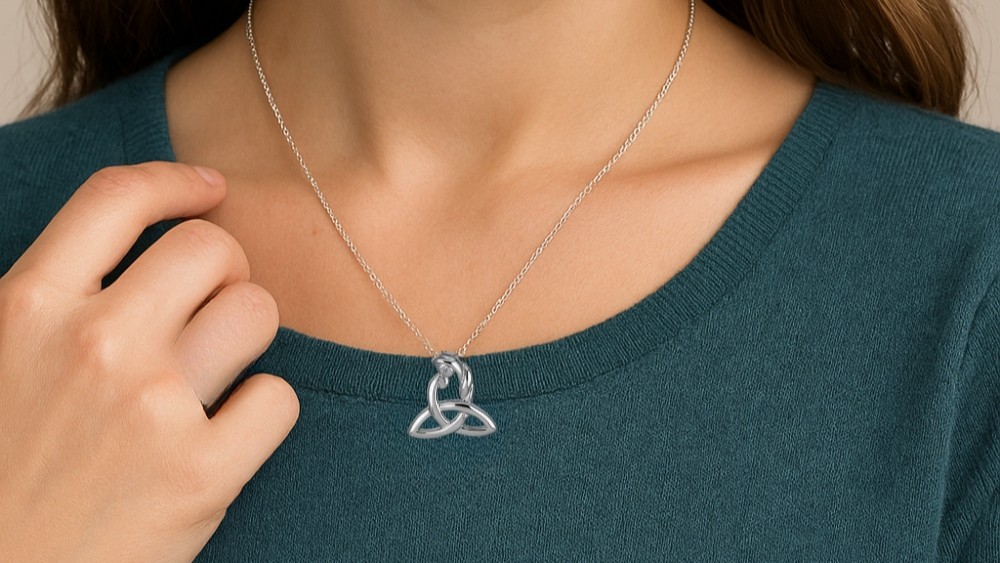
The Celtic Mothers Knot is a heartfelt modern design inspired by traditional Celtic knotwork, representing the unbreakable love between a mother and her child. Crafted from one continuous line, the knot forms a stylized heart or triquetra-like shape with no beginning and no end to symbolize the never-ending, unconditional love a mother gives.

This elegant and meaningful symbol has become one of the most beloved emblems in contemporary Irish jewelry. It resonates across generations and cultures as a reminder of the eternal bond and strength that defines motherhood.

Designed by Jennifer Derrig: A Mother’s Love Turned Into Art

The Celtic Mothers Knot from The Irish Jewelry Company holds even more meaning because of who created it. Jewelry designer and company founder Jennifer Derrig designed this symbol based on her own journey as a mother. Inspired by the deep connection she felt with her child, Jennifer sought to create a piece that would express the powerful, eternal love only a mother can understand.

With her design background and deep passion for Irish heritage, Jennifer crafted the Celtic Mothers Knot as a tribute not only to her own experience but to mothers everywhere. The piece speaks without words, a quiet, powerful reminder that love like this is forever. It’s more than jewelry. It’s a piece of her story, and one that beautifully mirrors the stories of mothers across the world.

Rooted in Celtic Tradition

While the Celtic Mothers Knot is a modern creation, it draws on centuries of Irish design heritage. Traditional Celtic knots, featured in ancient stone carvings and illuminated manuscripts like the Book of Kells, are known for their interwoven, infinite patterns. These designs have long symbolized unity, eternity, and the interconnectedness of life and spirit.

The Celtic Mothers Knot pays homage to those same values. Its flowing lines reflect the continuity of life, the strength of maternal love, and the sacred role of motherhood in Celtic culture. It’s a timeless design that bridges the old and the new, blending ancient art with modern meaning.

The Celtic Mothers Knot Jewelry Collection

Celebrate the unbreakable bond between mother and child with our beautifully crafted Celtic Mothers Knot Jewelry Collection. Each piece features the original Celtic Mothers Knot design created by Jennifer Derrig, symbolizing unconditional love, enduring protection, and the powerful cycle of motherhood.

This meaningful design, rooted in Celtic tradition, makes our jewelry the perfect gift for birthdays, Mother’s Day, baby showers, or any moment when you want to honor the heart of your family. Handcrafted in sterling silver and accented with detailed knotwork, our Celtic Mothers Knot pendants, rings, and earrings reflect strength, beauty, and timeless Irish heritage.

Whether you’re a proud Irish mother or someone who feels a deep connection to Celtic symbolism, this collection offers a wearable tribute to love that lasts a lifetime.

Why It’s the Perfect Gift

This collection has become a favorite among our customers for a reason. It’s more than just jewelry; it’s a personal expression of love and appreciation. Whether it’s for your mother, grandmother, daughter, or even yourself, the Celtic Mothers Knot is a meaningful way to say, “You are loved, always.”

Customers often choose these pieces for:

  • Mother’s Day
  • The birth of a child
  • Milestone birthdays
  • Memorial tributes
  • Every day, reminders of family love

Each item arrives beautifully packaged and gift-ready, with the craftsmanship and attention to detail The Irish Jewelry Company is known for.

What Our Customers Are Saying

“I gave this to my mother for her 60th birthday. She said it was the most meaningful gift she’s ever received.”

“I bought the Celtic Mothers Knot necklace for myself after losing my mom. It brings me comfort every time I wear it.”

“My daughter (husband) gave this to me on my first Mother’s Day. I cried. It’s stunning  and says everything I feel but can’t put into words.”

FAQs About the Celtic Mothers Knot

  • What does the Celtic Mothers Knot symbolize?
    It represents the eternal love, strength, and protection of a mother’s love, using one continuous Celtic-style line to express the idea of love without beginning or end.
  • Is this an authentic historical Celtic symbol?
    The Celtic Mothers Knot is a modern design, but it is heavily inspired by traditional Celtic knotwork and reflects the ancient values of motherhood, unity, and eternity found in Irish culture.
  • Who designed the Celtic Mothers Knot at The Irish Jewelry Company?
    The original design was created by jewelry artist Jennifer Derrig, inspired by her own journey through motherhood and her love for Irish symbolism and design.
  • What materials are used?
    The collection is handcrafted in fine sterling silver with some styles offered in gold plated as well as 10k and 14k gold. All items are made with high-quality craftsmanship and are ready for gifting.
  • Is it suitable as a memorial piece?
    Absolutely. Many customers choose the Celtic Mothers Knot as a loving tribute to a mother who has passed, or as a way to remember the powerful maternal bond they carry in their hearts.

A Celebration of Love, Heritage, and Strength

The Celtic Mothers Knot beautifully captures what words often cannot: the deep, eternal love between a mother and her child. Designed by a mother, inspired by her own story, and handcrafted with care, this symbol stands as a tribute to all mothers past, present, and future.

If you’re searching for a meaningful gift that reflects Irish heritage, feminine strength, and the sacredness of family, look no further. The Celtic Mothers Knot is more than a design. It’s a story. It’s a bond. It’s a legacy.

Explore the full Celtic Mothers Knot Collection and discover the piece that speaks to your heart.

How to Master the Layering Jewelry Trend

Layering necklaces is more than a passing fashion trend; it’s a personalized art form that blends culture, storytelling, and modern elegance. And in 2025, this layering jewelry trend is not only still in style—it’s stronger than ever.

From celebrities to street style influencers and Italian nonnas wearing their cherished religious medals, layering necklaces has become the signature look for expressing identity, faith, fashion, and just the right amount of sparkle.

At The Italian Jewelry Company, we believe that your jewelry should say something about who you are. That’s why we’ve created this comprehensive guide to help you master layering necklaces, inspired by timeless Italian style and the latest 2025 trends.


Is Layering Necklaces Out of Style?

Absolutely not. In fact, the layering jewelry trend continues to grow in popularity in 2025. Thanks to TikTok, Instagram, and runway influences, layered necklaces are a go-to style for everyday wear and special occasions alike. Whether you prefer a curated minimalist look or a bold stack with gold medallions and charms, there’s a layered combination for every aesthetic.


Is Layering Necklaces in Style in 2025?

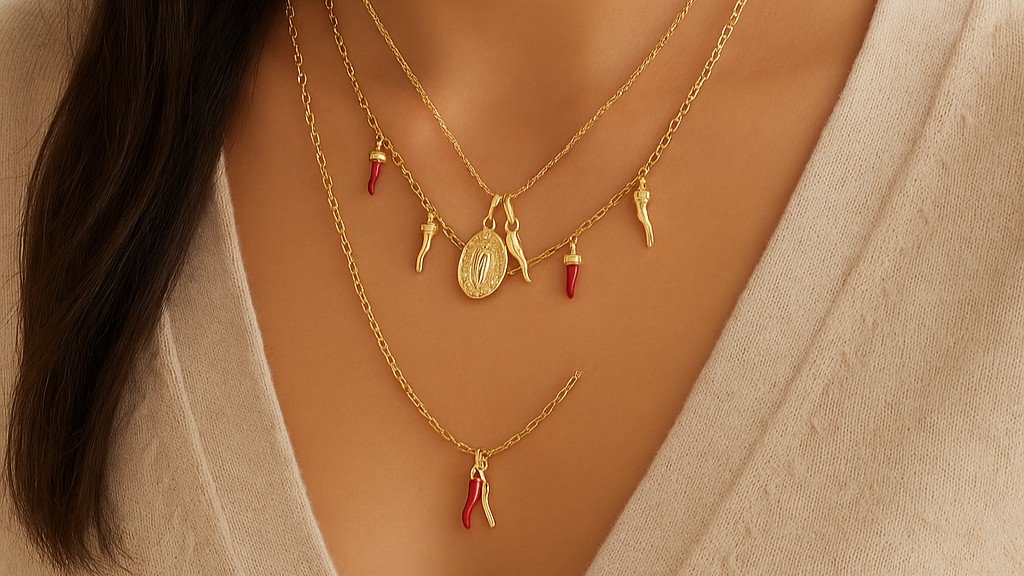
Yes! Layering necklaces is one of the biggest jewelry trends of 2025. From Milan to Manhattan, you’ll see women (and men!) styling multiple chains in different lengths, metals, and textures. The trend is shifting toward more meaningful layering, combining heirloom-inspired pieces like Miraculous Medals, Italian Horns (Cornicello), and religious symbols with contemporary designs like paperclip chains and gemstone pendants.


When Did Layering Necklaces Become Popular?

Layered jewelry has historical roots, especially in Mediterranean cultures. Italian women have long worn multiple chains and charms—each one representing protection, faith, or family. But the modern layering jewelry trend took off in the early 2010s and skyrocketed in the 2020s thanks to social media stylists and the rise of dainty, stackable necklaces.


What is the Rule for Layering Necklaces?

There’s no single rule for layering necklaces. It’s about expressing your personal style, but a few guidelines will help you avoid tangles and create a cohesive look:

  1. Vary the lengths.
  2. Mix textures, chain styles, and pendant sizes.
  3. Stick to a common theme or metal tone.
  4. Use a detangler clasp to prevent knots.
  5. Balance the stack—don’t overcrowd.

Let’s explore the details below.


It Starts with Different Lengths

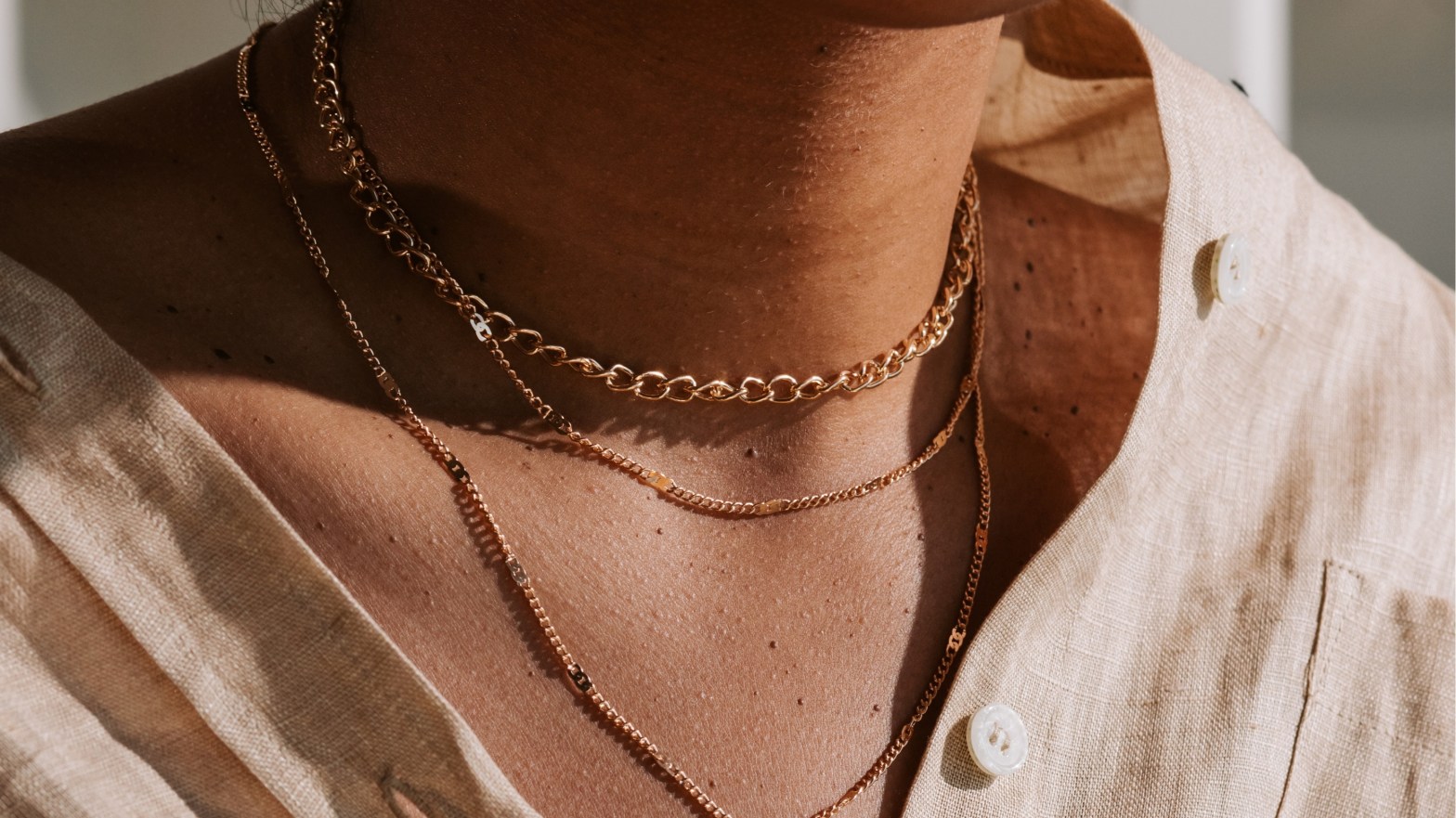
The most visually appealing layered looks incorporate multiple necklace lengths to create dimension. When each chain has its own space to shine, your look feels intentional and elegant.

Necklace Lengths to Consider:

  • Choker (14–16”): A base layer that hugs the neck.
  • Princess (17–19”): Ideal for a statement pendant or cross.
  • Matinee (20–24”): Adds space and structure to your stack.
  • Opera (28–36”): A dramatic finishing touch that elongates the neckline.

Pro Tip: Three layers are the sweet spot—one short, one mid, one long.


Prevent Tangles with a Detangler

Invest in a necklace layering clasp or detangler tool. These genius little devices keep each necklace separate, aligned, and tangle-free, especially important if you’re wearing delicate chains or layering necklaces with pendants.

Try magnetic clasps or slider-style detanglers that work with 2–4 necklaces.


Mix & Match with Confidence

The most stylish stacks combine different chain types and textures. Think:

Layer a classic gold figaro chain with a Cornicello charm, then add a long, delicate pendant like a Miraculous Medal or Roman Coin Necklace.

Shop our mix-and-match favorites:
Layering Necklaces Collection →


Consider Color, Symbolism & Gemstones

Adding gemstones and charms with meaning personalizes your layered look.
Combine gold with enamel red for passion and power, or silver and blue for peace and clarity.

Add meaning with:

View: Red Enamel Italian Horn Necklace →


Don’t Overpower the Outfit

Let your layered necklaces do the talking. Stick to simple tops, open collars, scoop necks, or sleek turtlenecks, and allow your jewelry to shine without distraction.

For weddings or events, pair your layers with a simple black dress and gold hoops for a look that’s effortlessly Italian chic.


Popular Types of Layering Necklaces

Here’s what to look for when building your stack:


Step-by-Step Guide to Layering Necklaces

Step 1: Build Your Base

Start with a simple, short chain. A 16” gold rope or figaro chain works beautifully. This base adds shine and structure.

Try: Italian Gold Over Sterling Figaro Necklace

Step 2: Add Your Focal Pendant

Choose a mid-length piece with a pendant that reflects your story or faith—like an Italian horn or religious medal.

Try: Italian Horn with Gold Beads

Step 3: Finish with a Long, Light Necklace

Top it off with a long, flowy chain or gemstone strand. This brings balance to your look.

Try: Adjustable Roman Coin Necklace


Trending in 2025: What’s Hot in Layering Jewelry?

  • Mixed metals: Yes, gold and silver can be friends.
  • Three-piece curated sets: Bundled necklaces designed to layer.
  • Meaningful charms: Personalized layering with initials, names, and symbols.
  • Chunky meets delicate: One bold statement chain mixed with two fine, minimalist ones.

People Also Ask:

Is Layering Necklaces Out of Style?

Not at all. In 2025, layering necklaces is a leading jewelry trend embraced by influencers, designers, and real women alike.

Is Layering Necklaces in Style in 2025?

Yes! It’s one of the most wearable, expressive styles this year.

What is the Rule for Layering Necklaces?

Vary lengths, mix textures, and keep balance. Use a detangler clasp to avoid tangles.

When Did Layering Necklaces Become Popular?

While Italians have layered for generations, the global trend exploded in the 2010s and became a jewelry staple by the 2020s.


About The Italian Jewelry Company

The Italian Jewelry Company is where modern design meets Old World soul. Founded by an Italian-American designer inspired by family, heritage, and meaningful jewelry, our collections are handmade or sourced directly from Italy. Every piece tells a story from heirloom Miraculous Medals to bold Cornicelli.

Explore our best-selling layering necklaces, and make your own statement in gold.

✨ Shop Now → Layering Necklaces Collection

The Italian Jewelry Company Emerges as the Premier Online Destination for Authentic Italian Jewelry

FOR IMMEDIATE RELEASE
August 2, 2025
New York, NY


The Italian Jewelry Company Emerges as the Premier Online Destination for Authentic Italian Jewelry

The Italian Jewelry Company, a leading online Italian jeweler, is redefining heritage and elegance with its exceptional collection of handmade Italian jewelry, trusted by thousands of customers across the U.S.

Rooted in the time-honored traditions of Italian craftsmanship, The Italian Jewelry Company offers a huge selection of authentic Italian jewelry styles, including Italian horn necklaces, Mano Cornuto pendants, Italian rosary beads, hoop earrings, and classic Italian gold chains. With an impeccable on-time shipping record and superior customer service, the brand has quickly risen to become the best online Italian jeweler for those seeking beauty, symbolism, and heritage.

“Our mission is simple,” says founder Jennifer Derrig. “To bring the heart of Italy into people’s homes through jewelry that’s steeped in tradition, handmade with pride, and worn with purpose.”

Timeless Designs, Modern Elegance

From Italian gold necklaces to Italian silver jewelry and designer earrings, The Italian Jewelry Company blends old-world artistry with modern sophistication. Every piece is curated to reflect the rich culture and iconic aesthetic of Italy—whether it’s a bold Mano Cornuto necklace, a delicate Italian wedding band, or a radiant gold-plated hoop earring.

For brides, the company offers an incredible selection of Italian bridal jewelry, including Italian engagement rings and wedding bands, expertly crafted to celebrate life’s most meaningful milestones with classic Italian flair.

Why Customers Trust The Italian Jewelry Company

  • Huge online selection of Italian jewelry styles
  • Handmade Italian jewelry crafted with care by skilled artisans
  • Fast, reliable shipping with a superior on-time delivery rate
  • Outstanding customer service praised for responsiveness and product quality
  • Authenticity guaranteed, sourcing directly from traditional workshops across Italy

Shop the Collection

Whether you’re searching for a classic gold Italian chain, a symbolic Italian horn, or fashion-forward Italian designer earrings, The Italian Jewelry Company offers the finest collection of Italian fashion jewelry and heirloom-quality pieces online.

Explore now:
www.theitalianjewelrycompany.com

For product reviews, media inquiries, or collaboration opportunities, contact:
info@theitalianjewelrycompany.com