The Promise Ring and its Significance in Irish Culture

The Irish Promise Ring and its Significance in Celtic Culture

In Celtic culture, jewelry has always carried meaning beyond simple adornment. From intricate knots that symbolize eternity to rings that express love and loyalty, these designs embody centuries of tradition. One of the most cherished pieces to emerge in modern times is the promise ring, a token of devotion, loyalty, and intention. Within Irish tradition, the Claddagh design has become one of the most popular ways to wear a promise ring, making it both a symbol of heritage and heartfelt emotion.


What is a Promise Ring?

promise ring is a meaningful piece of jewelry given to symbolize commitment between two people. It represents a pledge whether it’s a promise of fidelity, a vow of future engagement, or simply a way of saying, “I’m devoted to you.” Unlike an engagement ring, which specifically signals marriage, promise ring can carry many interpretations.

For young couples, a promise ring may signify exclusivity and the beginning of a serious relationship. For others, it may serve as a placeholder until the time is right for an engagement. In every case, promise ring communicates loyalty and intention.


Is a Promise Ring the Same as a Commitment Ring?

The terms are often used interchangeably, but a promise ring and a commitment ring can have subtle differences. A promise ring generally reflects a personal vow made between two people, while a commitment ring may also symbolize shared values, religious faith, or even a friendship bond.

Both pieces carry weight and emotion, but the Irish Claddagh design has emerged as one of the most meaningful settings for a promise ring, due to its timeless symbols of love, friendship, and loyalty.


Origin of the Promise Ring: Story of the Posy Ring

The promise ring has deep historical roots. During the Renaissance, lovers exchanged “posy rings,” simple bands engraved with short poems or romantic inscriptions. These inscriptions, known as “posies,” were declarations of love and devotion, making the rings early precursors of the modern promise ring.

In England and Ireland, posy rings were particularly cherished among couples who wanted to declare their bond publicly. Over time, the tradition of the posy ring evolved into the more defined promise ring, a tradition still cherished today.


The Irish Claddagh Ring: The Perfect Choice for a Promise Ring

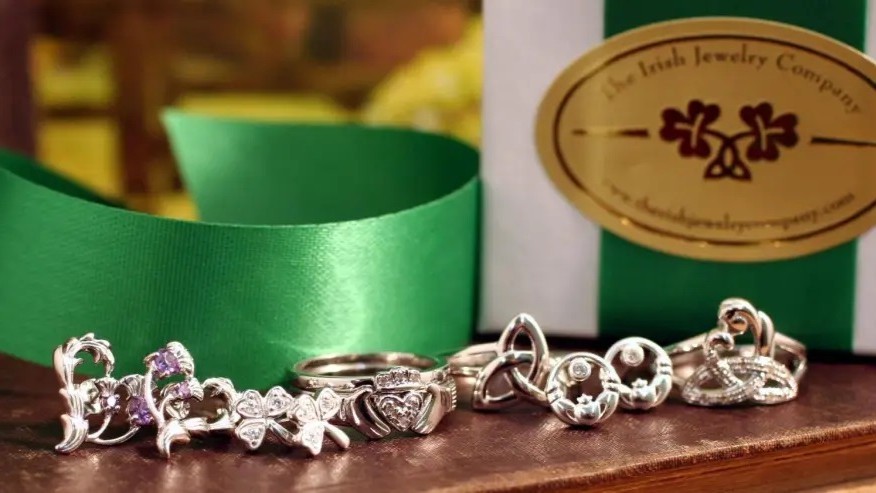
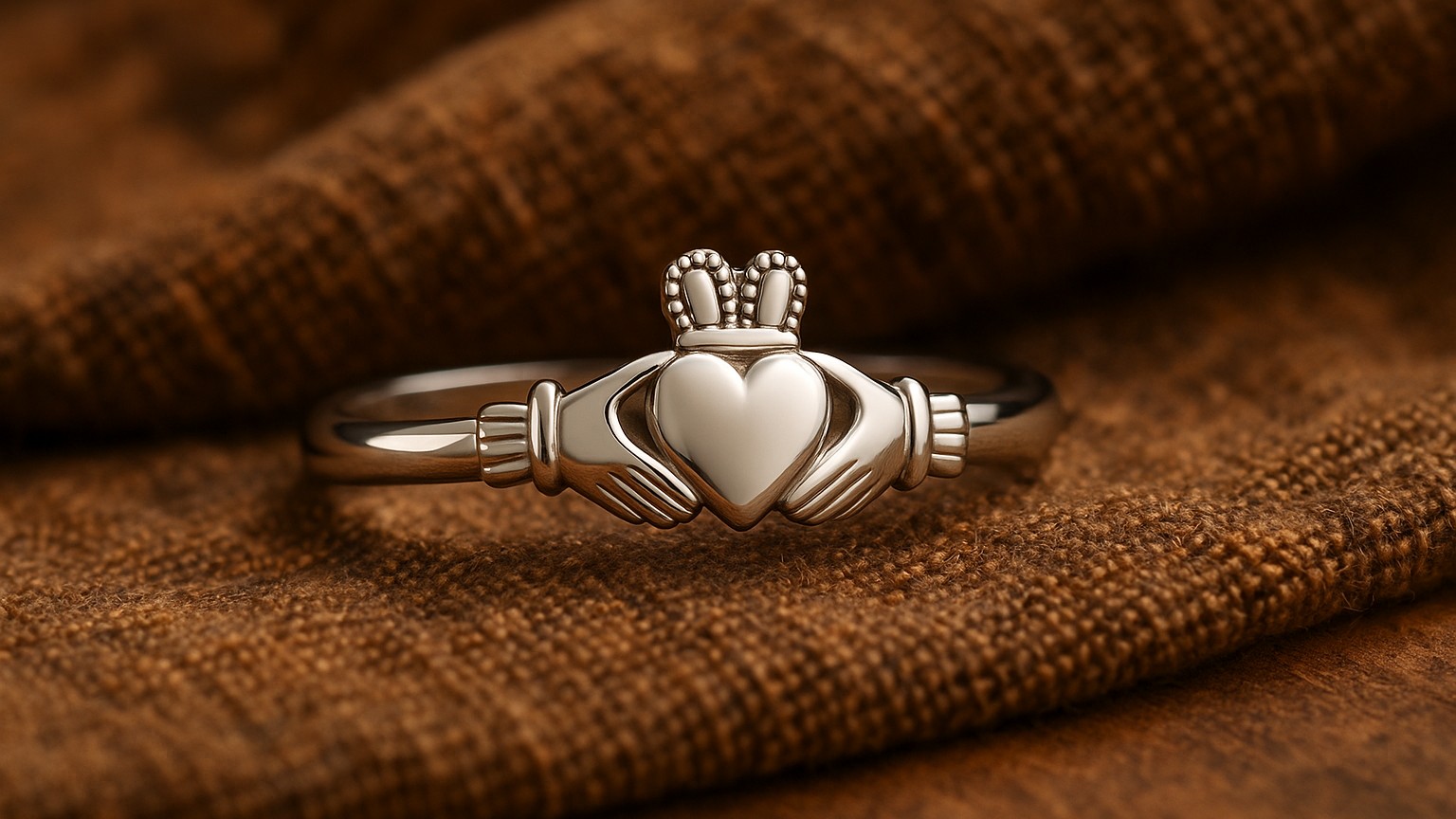
Among all designs, the Irish Claddagh has become synonymous with the promise ring. This traditional ring features a heart (representing love), hands (friendship), and a crown (loyalty). These three elements make the Claddagh one of the most perfect choices for a promise ring.

Origin of the Claddagh Ring?

The Claddagh design dates back to the 17th century in a small fishing village near Galway, Ireland. It is said that Richard Joyce, an Irishman captured by pirates, learned the art of goldsmithing while enslaved. Upon his release, he crafted the first Claddagh ring, dedicating it to his true love. This story of love, devotion, and loyalty resonates beautifully with the meaning of a promise ring.

Discover our Claddagh Rings

Explore our collection of Claddagh Rings here.

Our authentic designs are perfect for those looking for a heartfelt promise ring rooted in Irish tradition.


Crossover Knot Claddagh Ring Design

The Crossover Knot Claddagh Ring blends two powerful Celtic symbols into one. The infinity knot woven into the band represents eternity, while the Claddagh itself reflects love, friendship, and loyalty. Together, they create an exquisite promise ring that speaks of everlasting devotion.


Diamond and Sterling Silver Claddagh Stackable Ring Set

For a modern and versatile style, our Diamond and Sterling Silver Claddagh Stackable Ring Set is an elegant choice. This set can be worn together or separately, making it ideal as a promise ring that grows with your relationship.


How to Give a Promise Ring?

The giving of a promise ring should be heartfelt and sincere. There are no strict rules, but here are some meaningful ways to present it:

  • Private and Romantic: Over dinner, a quiet walk, or at a personal spot with shared memories.
  • Special Occasion: Birthdays, anniversaries, or holidays can be ideal times to gift a promise ring.
  • Symbolic Gesture: Some choose to recite a personal vow or read a poem when presenting a promise ring, echoing the ancient posy ring tradition.

The most important aspect is the sincerity of the moment. A promise ring should always carry genuine intent.


How Much Should I Spend on a Promise Ring?

Unlike engagement rings, there are no rules about cost when it comes to a promise ring. The focus is on the meaning rather than the price. Some couples choose sterling silver or simple gold bands, while others prefer more elaborate designs with gemstones or diamonds.

A good guideline is to spend what feels comfortable while ensuring that the promise ring is a piece your partner will cherish and proudly wear. The Irish Claddagh, in sterling silver or gold, offers a meaningful option that balances affordability with tradition.


The Bottom Line:

promise ring is a timeless token of love, devotion, and loyalty. In Celtic culture, where symbolism and tradition hold deep meaning, the Claddagh design is the perfect representation of what a promise ring should stand for. Whether you choose a simple silver design or a diamond-accented version, the sentiment remains powerful.


Claddagh September Birthstone Ring

For those looking for a personalized touch, the Claddagh September Birthstone Ring makes a stunning promise ring. Featuring a deep sapphire-blue stone, it symbolizes truth and sincerity, two essential elements of a genuine promise.


Ladies 10K White Gold Emerald Claddagh Ring

Another exceptional choice is the Ladies 10K White Gold Emerald Claddagh Ring. The emerald, Ireland’s most iconic gemstone, represents love and loyalty. Set in gold, this design transforms the Claddagh into an heirloom-worthy promise ring.


People Also Ask

What is the meaning of the promise ring?
The meaning of a promise ring is a pledge of love, loyalty, and future intention. It symbolizes devotion and commitment, whether as a pre-engagement token, a vow of fidelity, or a sign of exclusive love.

Which finger do I put a promise ring on?
Traditionally, a promise ring is worn on the ring finger of the left hand if it is meant as a pre-engagement ring. However, it can also be worn on the right hand to symbolize devotion without the immediate intention of marriage.

What is the 3 month rule for ring?
The “3 month rule” often refers to the guideline for engagement rings, suggesting a budget of three months’ salary. This does not apply to a promise ring, which is more about meaning than cost. Couples are free to choose a style and budget that reflects their personal relationship.

How serious is a promise ring?
promise ring is very serious in meaning; it reflects loyalty, trust, and a pledge for the future. While it may not carry the binding nature of an engagement ring, the emotional significance is equally important.


About The Irish Jewelry Company

The Irish Jewelry Company is proud to bring authentic Irish tradition to life through meaningful jewelry. From Claddagh rings to Celtic knot designs, each piece is crafted to carry the symbols of heritage and love.

Join our community!

Click here to become part of our community. Stay connected for stories of Irish culture, jewelry insights, and exclusive offers.
Grace O’Malley: Ireland’s Famous Pirate The Pirate Queen

Grace O’MalleyThe Pirate Queen

Who was Grace O’Malley?

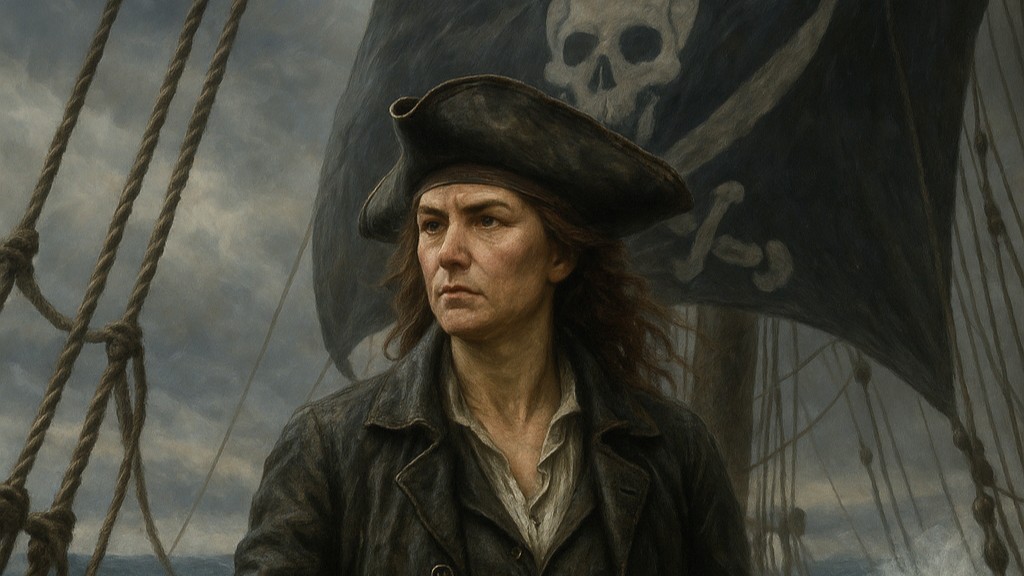
Grace O’Malley, also known as Gráinne Mhaol, was Ireland’s most legendary female pirate, better remembered as the Pirate Queen of Connacht. Born around 1530 into the powerful O’Malley clan of County Mayo, Grace grew up along the rugged western coast of Ireland. The O’Malleys were a seafaring family, controlling shipping routes and coastal trade. From an early age, Grace was fascinated by the sea.

Stories say she once cut her hair short to convince her father to let her sail, earning the nickname “Gráinne Mhaol,” meaning “Bald Grace.” Soon, she commanded her own fleet, dominating trade and coastal waters at a time when female leaders were nearly unheard of.

The Conquest of Ireland

Grace’s rise coincided with one of the most turbulent times in Irish history, the Tudor conquest of Ireland. As England expanded its control, Irish chieftains were forced to submit or fight. Grace O’Malley became a fearless leader, not only navigating treacherous seas but also standing against English forces who threatened her territory.

Her ships raided merchant vessels, levied tolls, and protected her clan’s waters. To some, she was a pirate. To others, she was a patriot—defending Irish independence at sea.

Grace O’Malley’s Love Life

Grace’s personal life was as dramatic as her adventures at sea. She married twice: first to Donal O’Flaherty, with whom she bore three children, and later to Richard Bourke, nicknamed “Iron Richard.” Unlike many women of her time, Grace refused to live in the shadows of her husband’s. She negotiated alliances, commanded men, and led fleets, showing Ireland that women could wield power both at home and on the seas.

Grace O’Malley and Queen Elizabeth I

One of Grace’s most famous stories is her meeting with Queen Elizabeth I in 1593. Legend says the two women met at Greenwich Palace, with Grace petitioning the Queen to release her captured son and restore her lands.

Despite neither speaking the other’s language, they communicated in Latin. Grace boldly refused to bow before Elizabeth, seeing herself as her equal, not her subject. This remarkable encounter between two powerful women of history continues to capture imaginations worldwide.

Celtic Anchor of Hope Pendant

Sailors like Grace O’Malley believed deeply in the anchor as a symbol of hope and stability. Our Celtic Anchor of Hope Pendant blends this maritime tradition with Celtic design—an inspiring piece for those navigating life’s storms.

Pirate Queen Pendant

Channel Grace’s legendary spirit with our Pirate Queen Pendant. This gold-over-silver necklace is more than jewelry; it’s a reminder of strength, adventure, and the untamed Irish spirit.

Grace O’Malley’s Enduring Impact

Grace O’Malley remains Ireland’s most famous female pirate. To this day, she symbolizes independence, courage, and leadership. Writers, historians, and musicians celebrate her as the true Pirate Queen of Ireland, keeping her story alive across generations.

People also ask:

Is The Pirate Queen based on a true story?
Yes—Grace O’Malley’s life inspired plays, books, and even musicals. Her daring exploits are well-documented in Irish history.

Who was the female pirate queen of Ireland?
Grace O’Malley is universally recognized as the Pirate Queen of Ireland.

What was Grace O’Malley’s petition to the Queen?
She petitioned Queen Elizabeth I for the release of her son and restoration of family lands, successfully negotiating with the English crown.

Who is the most famous pirate queen?
Grace O’Malley holds this title, though other women like Anne Bonny also gained fame on the seas.


International Talk Like a Pirate Day

September 19 is International Talk Like a Pirate Day, a playful celebration where people swap modern speech for hearty “Ahoy, matey!” and “Arrr!” greetings. While lighthearted today, it’s a fun way to honor figures like Grace O’Malley, who truly lived the pirate life.

People also ask:

Why is September 19 Talk Like a Pirate Day?
It began as a joke between friends in 1995 and quickly spread worldwide as a quirky holiday.

Does Krispy Kreme still do Talk Like a Pirate Day?
Many companies once celebrated with promotions, though traditions change yearly.

What is the meaning of Talk Like a Pirate Day?
It’s simply a fun excuse to embrace pirate lingo and celebrate swashbuckling legends.

How do you talk like a pirate greeting?
Common phrases include “Ahoy!” (hello), “Avast!” (pay attention), and “Shiver me timbers!” (surprise).


Irish Jewelry to Spoil Your Loved Ones

From Claddagh rings to Celtic pendants, The Irish Jewelry Company offers timeless treasures inspired by Ireland’s history and legends. Explore pieces that honor your heritage while adding a touch of elegance to everyday wear.

About The Irish Jewelry Company

We are proud to be one of the leading destinations for authentic Irish jewelry. Each piece reflects tradition, craftsmanship, and the magic of Irish culture.

Join our Community!

Celebrate Irish heritage with us exclusive offers, stories, and special savings await when you join our community! Click here to sign up.

Irish Wedding Traditions: Past and Present

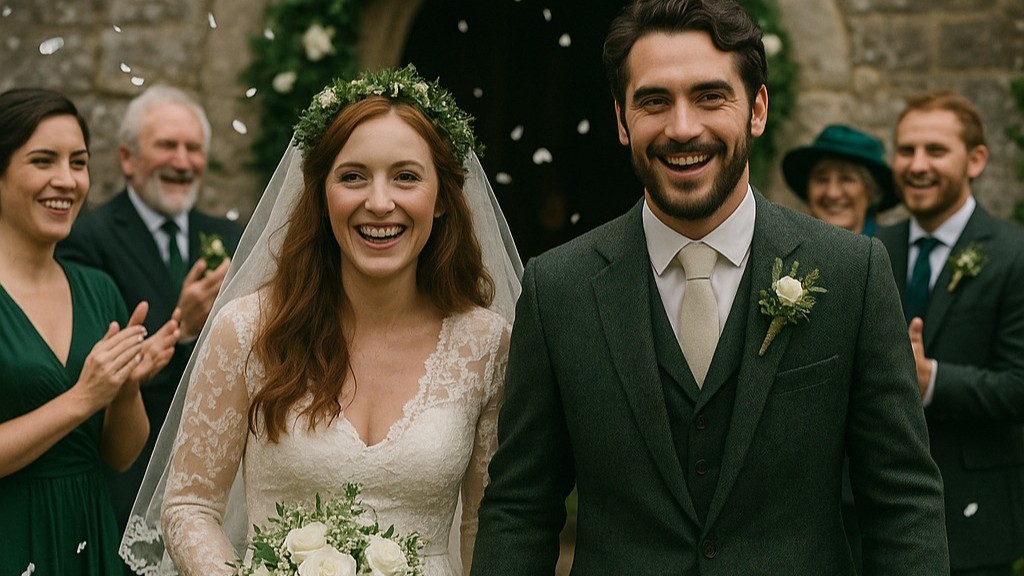
Weddings in Ireland have always been more than just a union of two people; they are a tapestry woven with history, symbolism, and a touch of Celtic magic. From ancient rituals tied to the Celts to modern celebrations that still honor these traditions, Irish weddings beautifully balance heritage with contemporary love stories. Today, couples often blend the old with the new, ensuring their big day feels timeless while uniquely personal.

Whether it’s the iconic Claddagh wedding ring, the lively steps of Irish dancing, or quirky customs like placing a Child of Prague statue in the garden, Irish weddings carry layers of meaning that connect couples to centuries of culture. Let’s explore how past and present traditions intertwine to create weddings rich in symbolism, love, and celebration.


Celtic Wedding Traditions Found in Modern Ceremonies

Handfasting Ceremony

One of the most enduring Celtic wedding traditions is the handfasting ceremony. This ancient ritual dates back to pre-Christian times, when couples would have their hands bound together with ribbon or cord as a symbol of unity and commitment. It was the origin of the phrase “tying the knot.”

In modern Irish weddings, handfasting often complements religious or civil vows, offering couples a way to honor their Celtic heritage. Couples choose ribbons in colors representing their values—red for passion, green for fertility, blue for loyalty, and the cords are tied into symbolic knots. The beauty of handfasting lies in its visual and spiritual connection to Ireland’s past, yet it feels fresh and romantic in today’s ceremonies.

Celtic Knot Rings

The Celtic knot, with its unending loops, represents eternity, making it a perfect motif for wedding rings. Many couples incorporate Celtic knotwork into their rings to symbolize eternal love, interconnectedness, and unbreakable bonds.

Explore Celtic Knot Wedding Rings

These designs often feature interwoven patterns that have no beginning or end, echoing the infinite cycle of life and love.

Featured Style: Comfort Fit Celtic Knot Ring

One stunning example is the Comfort Fit Celtic Knot Ring. Handcrafted in solid precious metal, its knotwork design embodies strength and continuity—making it an ideal choice for couples who want their rings to tell a story as enduring as their vows.


Ladies Celtic Design Diamond Set Ring

For brides who want to embrace tradition while sparkling with elegance, the diamond Trinity Knot engagement ring is a meaningful option. The Trinity Knot, or Triquetra, has deep Celtic roots, symbolizing faith, eternity, and the interconnectedness of life.

The Diamond Trinity Knot Engagement Ring Set blends this ancient symbol with modern design, combining timeless heritage with contemporary beauty. It represents not just a promise of love, but also a proud connection to Irish tradition.


Claddagh Wedding Rings

No discussion of Irish weddings is complete without the Claddagh ring. Originating in the fishing village of Claddagh in Galway, the design features hands (friendship), a heart (love), and a crown (loyalty). Together, these symbols represent the perfect foundation for marriage.

Explore Claddagh Wedding Rings

Traditionally, the Claddagh ring is worn in different ways to signal relationship status. For weddings, it’s worn on the left hand with the heart pointing inward toward the wearer, symbolizing love and commitment.

Featured Style: Lab Diamond Claddagh Ring

A modern take on this classic is the ½ Carat Lab Diamond 10K Gold Claddagh Ring. It enhances the traditional design with sparkling brilliance while keeping the symbolism intact.


Claddagh Wedding Ring Two Tone with Celtic Knotwork

Many couples choose to combine Irish traditions, pairing the Claddagh’s symbolic meaning with Celtic knotwork for added depth. The Claddagh Wedding Ring in Silver and 10K Gold achieves just that. The result is a meaningful blend of loyalty, eternal love, and Irish artistry perfect for modern couples who cherish heritage.


Irish Dancing at Weddings

No Irish wedding is complete without dancing! From lively jigs to traditional step dancing, music and movement are at the heart of Irish celebration. At receptions, professional Irish dancers often perform to delight guests, while friends and family take to the dance floor afterward.

Local Musical Instruments

Music is equally central, with fiddles, tin whistles, bodhráns (Irish drums), and harps filling the room with unmistakably Irish sound. This creates not just entertainment but also a cultural experience that connects generations and adds energy to the celebration.


Weird Irish Wedding Traditions

Ireland is also famous for its quirky wedding customs, some charming, some humorous, but all rooted in folklore.

Horseshoes for Good Luck

The horseshoe is one of Ireland’s most beloved symbols of good fortune. Brides often carried a horseshoe on their wedding day to ensure luck followed them into marriage. Today, this tradition has been reimagined in jewelry, like the Shamrock Horseshoe Necklace, making it a stylish keepsake of Irish luck.

Child of Prague

A particularly Irish quirk involves placing a statue of the Child of Prague outside the bride’s home the night before the wedding. Legend says this guarantees good weather on the big day. It’s still a popular practice, especially in rural Ireland.

Ward Off Evil Spirits with Bells

Another tradition involves ringing wedding bells to ward off evil spirits and bless the union. This custom gave rise to the phrase “wedding bells are ringing,” and many Irish couples still include bells in their ceremonies or décor.

The Magic Hankie

The “magic hankie” is a cloth carried by the bride that can later be sewn into a bonnet for the couple’s first child, symbolizing the continuation of love and family. This sweet tradition highlights the deep connection between Irish weddings and family heritage.


Ancient Irish Wedding Traditions

Long before modern rings and white dresses, Ireland’s wedding customs were deeply influenced by Celtic culture.

It’s Not Till “Death Do Us Part.”

In Celtic times, marriages weren’t necessarily lifelong. Some unions were made for a trial period often a year and a day. If the couple was unhappy, they could part ways without stigma.

What Is Mine Is Not Yours?

Property rights in ancient Ireland were complex. Men and women often kept separate property, and detailed contracts spelled out what belonged to whom in a marriage. It was surprisingly progressive for its time.

Specific Days for Weddings

The Celts believed certain days were luckier than others for weddings. For example, May was often avoided due to connections with the festival of Beltane, while Sunday was seen as the most favorable day to marry.


About The Irish Jewelry Company

At The Irish Jewelry Company, we honor these age-old traditions with designs that carry forward Ireland’s rich heritage. From Celtic Knot Wedding Rings to timeless Claddagh Rings, our jewelry celebrates the enduring beauty of Irish love stories.

Each piece is crafted with meaning, designed not just as an accessory but as a legacy. Whether you’re planning a wedding steeped in tradition or simply want to honor your Irish roots, our collection brings authenticity and artistry to your journey.

The Celtic Crosses of Clonmacnoise: Ireland’s Stone Testament of Faith and Art

In the rolling heart of Ireland’s midlands lies Clonmacnoise (pronounced “Clon-mac-noyce”), one of the most sacred monastic sites in all of Ireland. Nestled along the River Shannon in County Offaly, Clonmacnoise is home to some of the most famous Celtic Crosses in the world, each intricately carved with biblical stories, Celtic patterns, and ancient Irish artistry. These crosses are not only symbols of Ireland’s spiritual heritage but also powerful works of medieval art that continue to inspire visitors and craftspeople today.

Among them, the Cross of the Scriptures stands tall as one of the finest surviving examples of a Celtic High Cross in Ireland. For centuries, it has captured the imagination of pilgrims, historians, and artists alike and today, it even inspires modern jewelry design, such as the Cross of the Scriptures Necklace.


What is the Clonmacnoise Cross?

When people refer to the “Clonmacnoise Cross,” they usually mean the Cross of the Scriptures, the most celebrated of Clonmacnoise’s high crosses. Standing at nearly 13 feet tall, this sandstone masterpiece dates back to the early 10th century. Its carvings tell biblical stories in a way that monks and laypeople alike could understand a kind of medieval “illustrated Bible” in stone.

Unlike simpler grave markers, Celtic High Crosses like those at Clonmacnoise served a higher purpose. They were both teaching tools and public displays of faith. The Cross of the Scriptures depicts scenes such as:

  • The Crucifixion of Christ
  • The Last Judgment
  • The Arrest of Christ
  • Other Gospel-inspired images

These carvings brought Scripture to life for a largely illiterate population, reinforcing the teachings of the monastery. To stand before the cross even today is to witness Ireland’s history carved into stone.


What is the Most Famous Celtic Cross?

Ireland is dotted with hundreds of Celtic High Crosses, but the Cross of the Scriptures at Clonmacnoise is widely considered one of the most famous. Historians often cite it as the finest example of early medieval stonework. Its detailed panels and iconic ringed cross shape are so influential that countless replicas have been made across Ireland and beyond.

In fact, when you think of the classic Celtic Cross shape, a tall cross with a circle connecting its arms, you’re picturing the style perfected at Clonmacnoise.

The fame of the site is enhanced by its location: perched on the River Shannon, Clonmacnoise was a hub of religion, trade, and scholarship for over a thousand years. Kings and nobles sought burial here, making the crosses not just symbols of faith but also monuments of status and memory.


What is the Significance of Clonmacnoise?

Clonmacnoise is far more than a collection of ruins; it is one of Ireland’s most historically and spiritually significant sites. Founded in the mid-6th century by St. Ciarán of Clonmacnoise, the monastery quickly became one of the great centers of learning and religion in early Christian Ireland.

For centuries, Clonmacnoise was a crossroads where faith, culture, and politics met:

  • A Monastic University: Scholars from across Europe studied here, copying manuscripts, producing metalwork, and creating illuminated texts.
  • A Royal Burial Site: Kings of Tara and Connacht were buried here, giving it immense political prestige.
  • An Artistic Beacon: The site’s round towers, churches, and Celtic crosses influenced architecture and art throughout Ireland.

Today, Clonmacnoise remains one of the most visited heritage sites in Ireland. Its crumbling churches, round towers, and Celtic crosses stand as a testament to Ireland’s early Christian Golden Age.


What Saint is Associated with Clonmacnoise?

The saint most closely associated with Clonmacnoise is St. Ciarán (Ciarán mac an tSaeir). Born around 516 AD in County Roscommon, he was the son of a carpenter and trained under St. Finnian at Clonard before founding his own monastery at Clonmacnoise.

Although St. Ciarán died at a young age, likely around 33, his influence was profound. His monastery thrived long after his death, becoming one of Ireland’s most enduring centers of Christian learning. Today, pilgrims still come to Clonmacnoise to honor his memory.


The Three Great Crosses of Clonmacnoise

While the Cross of the Scriptures is the most famous, Clonmacnoise boasts three monumental high crosses, each with its own story:

1. The Cross of the Scriptures

  • Dates: 10th century
  • Material: Sandstone
  • Features: Carved biblical panels, inscriptions mentioning kings and abbots
  • Significance: Considered the finest surviving high cross in Ireland

2. The North Cross

  • Dates: Likely 8th or 9th century
  • Features: One of the earliest examples of a ringed cross in Ireland
  • Style: Heavily influenced by metalwork, with interlacing designs and abstract patterns
  • Condition: Only the shaft survives, but its carvings show an evolution in cross design

3. The South Cross

  • Dates: 9th century
  • Features: Sometimes called the “Cross of Patrick and Columba”
  • Design: Bold, abstract carvings rather than detailed figural scenes
  • Significance: Symbolically connects Ireland’s two most famous saints, St. Patrick and St. Columba

Together, these crosses show the progression of Irish stone carving from simple abstract designs to fully realized biblical storytelling.


Celtic Cross Symbolism at Clonmacnoise

The Celtic Cross itself is rich with symbolism. Its circle, connecting the arms of the cross, is said to represent eternity, the sun, or the unity of heaven and earth. At Clonmacnoise, the crosses combine Christian faith with older Celtic motifs, creating a uniquely Irish form of devotion.

This fusion of cultures is why the Celtic Cross remains one of the most enduring symbols of Ireland today. It speaks not only to faith but also to heritage and identity.


Clonmacnoise in the Modern World

Visiting Clonmacnoise today feels like stepping back in time. The crosses stand weathered but proud, protected by replicas placed outdoors, while the originals are preserved in a visitor center. Pilgrims and tourists alike are drawn to the site’s quiet majesty, often leaving with a deeper appreciation of Ireland’s spiritual and artistic past.

And yet, the crosses’ influence continues far beyond the monastery walls. From Irish cemeteries to jewelry designs, the Celtic Cross remains a beloved emblem.


From Stone to Jewelry: The Cross of the Scriptures Necklace

At The Irish Jewelry Company, the Cross of the Scriptures Necklace captures the timeless beauty of Clonmacnoise’s most famous high cross in miniature form. Crafted with intricate detail, this piece allows you to carry a part of Ireland’s sacred history with you.

Just as the monks carved biblical stories into stone, modern jewelers translate those same designs into precious metals, creating wearable reminders of faith, heritage, and artistry. For many, owning such a necklace is not only about beauty but also about a spiritual connection to Ireland’s past.


FAQs About Clonmacnoise and Its Crosses

What is the Clonmacnoise Cross?

The Clonmacnoise Cross, also known as the Cross of the Scriptures, is a 10th-century high cross covered in biblical carvings. It stands as one of the most famous Celtic Crosses in Ireland.

What is the most famous Celtic Cross?

The Cross of the Scriptures at Clonmacnoise is widely considered the most famous and finest surviving Celtic High Cross.

What is the significance of Clonmacnoise?

Clonmacnoise was a major center of religion, learning, and politics in medieval Ireland, known for its monastery, royal burials, and artistic achievements.

What saint is associated with Clonmacnoise?

Clonmacnoise was founded by St. Ciarán, who is venerated as its patron and spiritual father.


Conclusion: The Enduring Legacy of Clonmacnoise

The Celtic Crosses of Clonmacnoise are more than ancient stone monuments; they are timeless symbols of Ireland’s faith, artistry, and cultural identity. From the Cross of the Scriptures to the simpler South and North Crosses, they embody a unique blend of Christian devotion and Celtic creativity.

To stand before them is to step into a story that spans over a thousand years. And today, thanks to modern artisans, you don’t need to travel to County Offaly to bring that story home. The Cross of the Scriptures Necklace allows you to wear a piece of Ireland’s sacred history close to your heart, carrying forward the legacy of Clonmacnoise into the present day.

Malocchio Symptoms and Evil Eye Symptoms: Understanding and Protecting Yourself

The concept of the malocchio, commonly known as the “evil eye,” has fascinated, frightened, and shaped cultures for thousands of years. In Italian folklore, it is believed that envy and negativity can be cast through a simple glare, bringing misfortune, illness, or bad luck to its unsuspecting victim. Across the world, from ancient Mesopotamia to modern Italy, people continue to recognize and protect themselves against this mysterious force.

But what exactly are malocchio symptoms and evil eye symptoms? How do you know if you’ve been affected, and more importantly, how can you protect yourself? This in-depth guide explores the origins, signs, detection, and protective traditions associated with the malocchio while also celebrating the enduring cultural heritage of Italian protective jewelry.


Understanding the Evil Eye (Malocchio)

The word malocchio comes from Italian: “mal” meaning “bad” and “occhio” meaning “eye.” It is one of the most enduring superstitions in Italy and among Italian Americans. The belief holds that a jealous glance or even unintentional admiration can transmit harmful energy.

While the idea might sound like folklore, millions of people worldwide continue to believe in its effects. The evil eye is not just an Italian concept; it is part of a larger global tradition.


Origins and Beliefs

The idea of the evil eye can be traced back to some of the oldest civilizations:

  • Mesopotamia: Clay tablets record spells and incantations used to protect against harmful glances.
  • Egypt: Amulets shaped like the “Eye of Horus” were carried for protection.
  • Greece: The “mati” is still one of the most common protective charms.
  • Rome: The Romans believed in fascinum, a harmful gaze associated with envy, and used phallic charms and hand gestures for protection.

In Italy, the malocchio remains deeply rooted in daily life. Even today, it is considered unwise to boast about your success or beauty, as doing so might invite jealousy and trigger the malocchio.


Malocchio Symptoms or Evil Eye Symptoms

How do you know if you’ve been struck by the malocchio? While there is no medical diagnosis, traditions describe a range of physical, emotional, and circumstantial signs. These malocchio symptoms are believed to signal that someone has cast the evil eye upon you.

Common Evil Eye Symptoms

  1. Unexpected bad luck or misfortune – A string of sudden accidents, broken items, or small disasters.
  2. Sudden physical illness or pain – Headaches, stomachaches, dizziness, or nausea with no clear cause.
  3. Mental or emotional distress – Anxiety, irritability, sadness, or restlessness.
  4. Unusual fatigue or weakness – Feeling drained of energy despite resting.
  5. Financial problems or loss of wealth – Sudden, unexplainable setbacks in business or personal finances.
  6. Loss of appetite or disturbed sleep – Insomnia, nightmares, or general unease at night.

Physical Malocchio Symptoms

  • Constant headaches.
  • Upset stomach or digestive problems.
  • Muscle tension or aches without exertion.

Emotional Malocchio Symptoms

  • Feeling unexplainably nervous.
  • Sudden anger or frustration.
  • Loss of interest in hobbies or socializing.

Circumstantial Malocchio Symptoms

  • A streak of “bad luck” that feels unnatural.
  • Projects are failing at the last moment.
  • Strained personal relationships without cause.

Across Italy, families still recognize these evil eye symptoms as a sign of being affected by envy or negative energy.


Detection: How to Tell If You Have the Malocchio

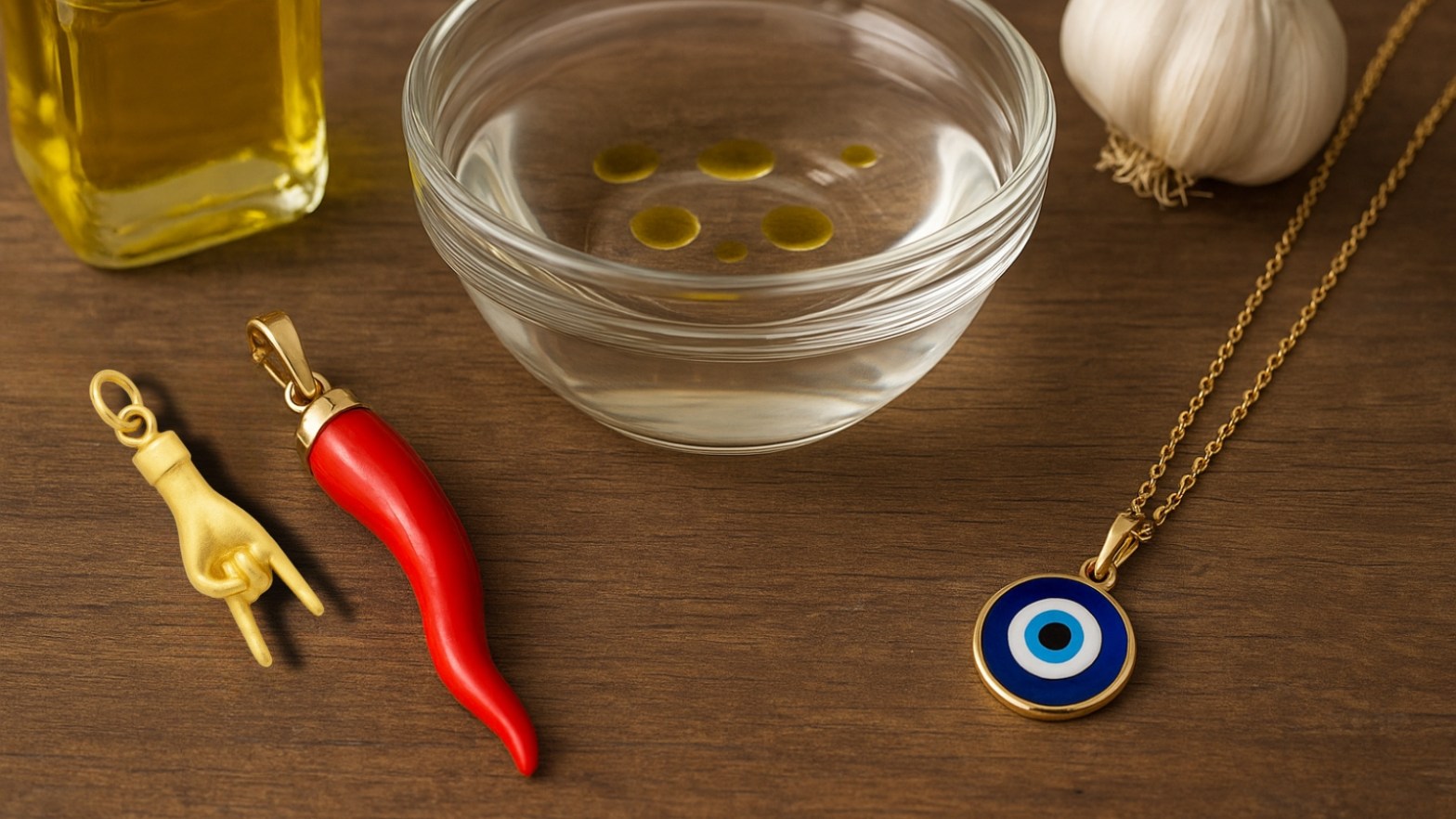
For centuries, Italians have used folk methods to determine whether a person is suffering from the evil eye. The most famous is the olive oil and water test.

  • A bowl of water is filled.
  • Drops of olive oil are added by someone who knows the ritual.
  • If the oil spreads unnaturally, it indicates the presence of the malocchio.
  • If the oil stays in neat droplets, the person is believed to be safe.

In many families, only certain elders know the prayer associated with this test, and it is often performed on Christmas Eve or other sacred times.


Protective Measures Against the Evil Eye

Rather than focusing on causing harm, Italian tradition emphasizes protection and the removal of negative energy. Over generations, families have passed down ways to guard against the malocchio.

Amulets and Charms

Protective jewelry has always been a primary defense. Some of the most famous include:

  • Cornicello (Italian Horn) – A twisted horn-shaped amulet symbolizing fertility, strength, and protection. Shop Cornicello Jewelry →
  • Mano Cornuto (Horned Hand Charm) – A hand gesture or charm that deflects negativity. Explore Mano Cornuto Charms →
  • Cimaruta – A traditional charm featuring a sprig of rue, used for centuries in Southern Italy.
  • Madonna and Saint Michael Medals – Religious medals believed to shield wearers from harm.
  • Hamsa – Though more Middle Eastern in origin, the Hamsa hand has also been embraced in Italian-American communities as a symbol of protection. Discover Hamsa Jewelry →
  • Malocchio Charms – Specifically designed to guard against the evil eye. Shop Malocchio Jewelry →

Garlic

Hanging garlic by the doorway or even wearing it has been believed to repel harmful energy.

The Color Red

In Italian folklore, red is a protective color. Tying a red ribbon around a crib or wrist is thought to keep children safe from malocchio symptoms.

Gestures

Making the mano cornuta (horned hand) gesture is a classic way to ward off the evil eye, still seen among Italians worldwide.

Prayers

Special prayers against the evil eye, often whispered in dialect, are passed secretly from generation to generation. These prayers are considered sacred and powerful, said only at specific times of the year.


Modern Interpretations of Malocchio Symptoms

While some dismiss the malocchio as superstition, modern psychology and anthropology see it differently. The belief in the evil eye can create real symptoms through stress, anxiety, and suggestion. Known as the nocebo effect (the opposite of the placebo effect), negative expectations can lead to genuine feelings of illness or misfortune.

Cultural anthropologists suggest that these beliefs persist because they offer a way to explain misfortune and provide comfort through rituals and protective objects. Wearing an amulet or saying a prayer restores a sense of control in uncertain times.


Evil Eye Jewelry: Protection and Heritage

Today, many people wear evil eye jewelry not only as a stylish accessory but also as a nod to their cultural heritage and as a symbol of protection. Italian Americans, in particular, cherish charms like the cornicello or mano cornuto as reminders of their ancestors’ traditions.

At The Italian Jewelry Company, you’ll find authentic collections of protective charms designed in Italy, including:

  • Cornicello Necklaces & Bracelets – Traditional and modern designs.
  • Mano Cornuto Jewelry – Charms carrying centuries of symbolism.
  • Hamsa Jewelry – Elegant protective pieces.
  • Malocchio Charms – Crafted to embody both beauty and protection.

Wearing these charms connects you not only to your Italian heritage but also to a centuries-old protective tradition.


FAQs: Malocchio Symptoms and Evil Eye Symptoms

What are the main malocchio symptoms?
Headaches, fatigue, unexplained bad luck, anxiety, and sudden illness are the most common.

Can evil eye symptoms be real?
Yes—while there’s no scientific proof of the evil eye, stress and suggestion can cause real physical symptoms.

How do Italians cure the malocchio?
Through prayers, the olive oil and water ritual, or wearing protective charms like the cornicello.

Do I need to believe in the evil eye for it to affect me?
Tradition says yes, but many wear protective jewelry simply for cultural pride or fashion.

Can jewelry protect me from the evil eye?
Protective amulets like cornicello and mano cornuto are believed to guard against malocchio symptoms.


About Us: The Italian Jewelry Company

At The Italian Jewelry Company, we believe jewelry should tell a story. Our pieces are more than accessories; they are symbols of heritage, faith, and protection. Inspired by Italian culture and traditions, our collections include authentic cornicello charmsmano cornuto jewelrymalocchio pendants, and hamsa designs, all crafted to bring beauty and meaning to your life.

Every piece is chosen with care, designed to honor centuries-old traditions while fitting seamlessly into today’s style. Whether you wear your jewelry for protection, faith, or simply as a connection to your Italian roots, we are proud to help keep these traditions alive.

Shop our protective Italian jewelry collections here →


Conclusion

The belief in the evil eye has survived for millennia because it speaks to a universal human truth: envy and negativity can impact us, whether spiritually, emotionally, or psychologically. By understanding malocchio symptoms and evil eye symptoms, you can better recognize when negativity may be influencing your life—and take steps to protect yourself.

From ancient prayers to modern jewelry, the malocchio remains a powerful reminder of the need for protection and positivity. And thanks to traditions carried on through jewelry like the cornicellomano cornuto, and malocchio charms, you can continue to honor this heritage while safeguarding yourself in style.

How to Put the Malocchio on Someone: Italian Evil Eye Meaning, Steps & Protection

How to Give the Malocchio or the Evil Eye

Legend has it, you can give someone the Malocchio, the evil eye, simply with a look. Italians say the curse is born from envy: a jealous stare, too much admiration, or bragging about your own good fortune can all trigger it. That’s why many Southern Italians are superstitious about boasting, preferring instead to stay humble so as not to “attract the eye.”

The belief in the evil eye stretches back thousands of years. Ancient Romans warned against it, and throughout the Mediterranean cultures, from Greece to the Middle East, similar traditions developed. In Southern Italy, whispers of malocchio are still heard in kitchens, piazzas, and Sunday family dinners. It’s less about true dark magic and more about colorful folklore, but that doesn’t stop people from protecting themselves with charms and rituals!


Steps

Giving the Malocchio or Evil Eye

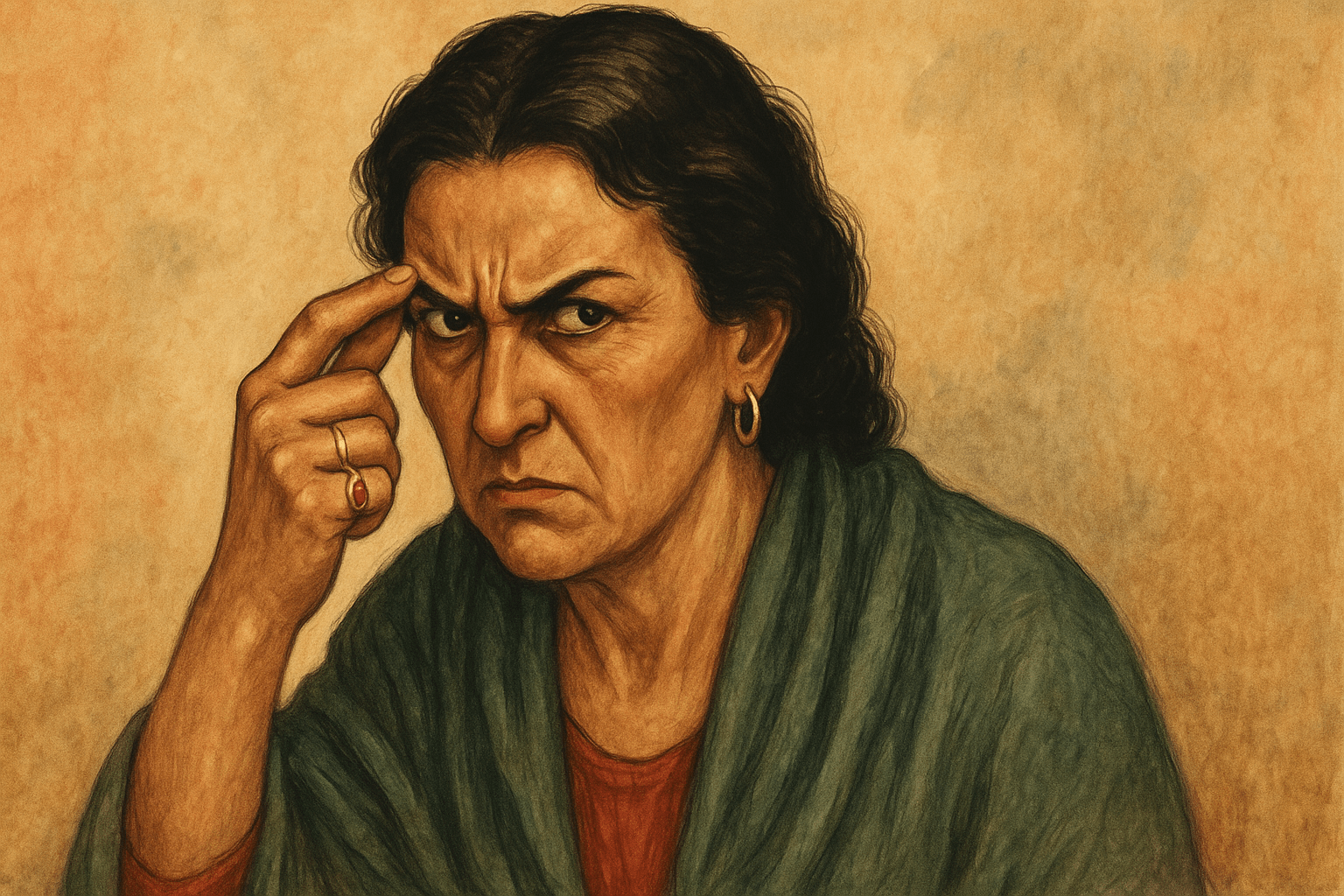
The simplest way to give the evil eye is through a look. It’s said that a person overflowing with envy or jealousy can transmit negativity with nothing more than their gaze. Sometimes, it’s not even intentional. Complimenting a child or someone’s good luck too strongly, without adding a blessing or gesture, is believed to “activate” the curse.

Perfecting the Malocchio Technique

If you’re telling the story with dramatic flair, here’s how the Southern Italian folklore says it works:

  1. Lock eyes with your target. Your stare should be direct, focused, and intense.
  2. Channel emotion, whether envy, jealousy, or exaggerated admiration.
  3. Linger just long enough to make it noticeable.
  4. Add a gesture, an arched eyebrow, a knowing smirk, even muttering something under your breath.
  5. And for storytelling effect, imagine that with one look, you’ve sent bad luck their way.

Remember, this is folklore. No real harm comes from giving “the eye,” but it makes for a fantastic story at the dinner table!


People Also Ask

How does someone cast an evil eye?
Tradition says it’s cast through an envious or admiring look, too much energy focused on someone else.

How is an evil eye cast?
Usually, with the eyes alone, though in some regions, words or gestures might accompany it.

How to activate the evil eye?
By over-praising without offering protection, or by looking at someone with jealousy.

How to cast off an evil eye?
Families in Southern Italy often rely on rituals passed down through generations, like prayers, olive oil in water tests, or protective charms.


Tips

  • Add Humor: If someone teases you about putting the evil eye on them, wink and play along—it’s part of the fun.
  • Use Counter Gestures: The famous Italian “mano cornuto” (horned hand gesture) pointing downward is believed to repel the eye.
  • Stay Humble: Avoid bragging about wealth or success. Italians believe showing off is an open invitation for envy.
  • Wear Protection: Amulets and charms are a stylish and traditional safeguard.

Warnings

  • Don’t take it too seriously; it’s superstition, not science.
  • Giving someone the “evil eye” in jest is fine, but don’t use it to genuinely upset or scare others.
  • Some elders might take the curse seriously, so always be respectful when joking about it.

Protecting Yourself from the Malocchio

While the malocchio is steeped in folklore, many Southern Italians and Mediterranean cultures swear by protective symbols. Today, they’ve become fashionable jewelry with a meaningful twist:

  • Mano Cornuto Jewelry – The horned hand is one of Italy’s most famous protective signs. Wearing a Mano Cornuto pendant or bracelet is said to deflect jealousy and negativity.
  • Hamsa Jewelry – The open palm, often with an eye at its center, is another ancient symbol of protection against curses. Explore our Hamsa jewelry collection for timeless designs that carry spiritual meaning.
  • Cornicello Horns – The red Italian horn remains a classic good-luck charm, worn by generations to guard against bad energy.

Final Word

The malocchio is one of Italy’s most enduring superstitions, a fascinating blend of history, culture, and playful storytelling. Whether you’re pretending to cast the evil eye at a family gathering or simply wearing a protective charm as a nod to tradition, it’s a fun way to keep the folklore alive.

And if you’d like a little stylish protection for yourself, nothing beats authentic Italian amulets, beautifully made, meaningful, and perfect for warding off even the fiercest stare.

Jewelry: Definition, Types, Trends, and Timeless Appeal

What is Jewelry?

Jewelry has been an essential part of human culture for thousands of years, serving not only as adornment but also as a reflection of status, identity, and artistry. From ancient civilizations that crafted jewelry from shells and bones to today’s dazzling creations of gold, silver, and gemstones, jewelry continues to hold a unique place in our lives. Whether it’s a wedding band, a cherished heirloom, or a trendy bracelet, jewelry is more than decoration; it is a story, a symbol, and an expression of personal style.

In this comprehensive guide, we’ll explore the definition of jewelry, types of jewelry, materials, the latest trends, what permanent jewelry means, and answer common questions people ask. If you’ve ever wondered what makes jewelry so significant, or if you’re searching for the best place to shop, this article will cover it all.


Jewelry Definition

By definition,jewelry refers to decorative items worn for personal adornment, including necklaces, rings, earrings, and bracelets. The term comes from the Old French “juel” meaning jewel. Over centuries, jewelry has evolved from being a display of wealth and protection against evil spirits to a mainstream way of celebrating milestones, expressing love, and elevating style.

In modern usage,jewelry is not confined to luxury alone. Fashion jewelry, affordable pieces, and personalized designs make jewelry accessible to everyone, regardless of budget. Whether crafted from precious metals like gold and platinum or alternative materials like wood and glass, jewelry has universal appeal.


Jewelry Pronunciation

The pronunciation of jewelry often sparks debate. In American English, it’s commonly pronounced as “jool-ree.” In British English, the word is spelled “jewellery,” with an extra “l” and “e,” but both forms refer to the same thing. Regardless of how you pronounce it, the meaning remains the same—beautiful pieces designed to enhance appearance and signify meaning.


Types of Jewelry

Jewelry can be divided into several categories, each with its own charm and purpose. Below are the primary types:

Necklaces & Pendants

Necklaces are among the most popular forms of jewelry. From delicate chains to bold statement pendants, necklaces can instantly transform an outfit. Pendant jewelry often carries deeper meaning, from religious crosses to Celtic knots, making them more than simple accessories.

Earrings

Earrings are versatile pieces of jewelry available in countless styles—studs, hoops, chandeliers, climbers, and more. Earrings are often the first piece of jewelry people wear, and their variety allows them to complement any face shape or personal style.

Rings

Rings hold symbolic importance in nearly every culture. From engagement rings symbolizing commitment to signet rings denoting status, this category of jewelry is vast. Rings can be plain, gemstone-encrusted, or artistic expressions in silver, gold, or platinum.

Bracelets

Bracelets range from simple bangles to intricate cuffs. Charm bracelets tell personal stories, while tennis bracelets lined with diamonds convey timeless elegance. This type of jewelry offers endless opportunities for personalization.

Other Jewelry Pieces

Jewelry isn’t limited to the big four categories. Brooches, cufflinks, anklets, tiaras, and even body chains fall into this broader classification. Each brings individuality to fashion and personal expression.


Jewelry Materials

The materials used in jewelry greatly influence its value, durability, and aesthetic.

Metals

  • Gold Jewelry: Timeless, luxurious, and versatile.
  • Silver Jewelry: Affordable, sleek, and elegant.
  • Platinum Jewelry: Durable, rare, and prestigious.

Gemstones

Diamonds, rubies, emeralds, and sapphires dominate fine jewelry. Each gemstone carries meaning: diamonds for love, emeralds for hope, rubies for passion, and sapphires for wisdom.

Other Materials

Contemporary jewelry often incorporates alternative materials such as wood, shells, glass, and ceramics. These give jewelry an artistic, modern twist.


Jewelry Trends in 2025

The world of jewelry constantly evolves, blending timeless classics with bold new styles. As we enter 2025, here are the most talked-about trends:

Bold Colors

Bright gemstones like turquoise, emerald, and citrine are taking center stage. Jewelry in vibrant hues is being worn to make confident fashion statements.

Personalized Jewelry

Custom jewelry with engravings, initials, and birthstones is a trend that continues to grow. Consumers want jewelry that speaks to their personal stories and relationships.

Sustainable Jewelry

Eco-conscious shoppers are prioritizing sustainable jewelry, choosing brands that use recycled metals and ethically sourced stones. Sustainable jewelry has shifted from a niche to a mainstream demand.

Vintage and Heirloom Jewelry

Vintage jewelry is experiencing a revival. Heirloom rings, antique lockets, and art deco bracelets not only carry history but also bring timeless elegance to modern wardrobes.


What is Permanent Jewelry?

Permanent jewelry refers to custom-fitted pieces, typically bracelets, that are welded directly onto the wearer’s wrist without a clasp. Often called “forever jewelry,” these pieces symbolize eternal bonds, much like a tattoo but in adornment form. The trend has gained popularity among couples, best friends, and family members seeking jewelry that represents a lifelong connection.

Permanent jewelry has surged in demand at pop-up shops and boutiques. Unlike traditional jewelry, which can be taken off at any time, permanent jewelry becomes part of daily life. Its popularity speaks to the growing desire for jewelry with deeper meaning beyond fashion.


People Also Ask: Jewelry FAQs

Is it jewelry or jewellery?

Both are correct. “Jewelry” is the American spelling, while “jewellery” is used in British English.

What is the 2:1:1 rule for jewelry?

The 2:1:1 rule suggests balancing jewelry by wearing two statement pieces, one subtle piece, and one minimal accessory to avoid over-accessorizing.

Is it spelled jewellery or jewelry?

In the U.S., “jewelry” is the accepted spelling. In the U.K., Canada, and Australia, it’s spelled “jewellery.”

What’s popular in jewelry right now?

In 2025, bold gemstone colors, personalized jewelry, sustainable jewelry, and vintage-inspired designs are dominating trends. Permanent jewelry is also gaining momentum.


Jewelry as Personal Expression

Jewelry has always been more than an accessory; it is a language of love, faith, and identity. Religious jewelry like crosses and rosaries represents devotion, while cultural pieces like Claddagh rings or Celtic knots preserve heritage. Engagement rings symbolize promises, while charm bracelets tell personal stories.

Whether casual, luxurious, or symbolic, jewelry allows people to wear their values and style on display. It’s no wonder jewelry continues to thrive in every culture and generation.


Jewelry and Emotional Significance

One of the most compelling aspects of jewelry is its ability to carry meaning. Jewelry is often passed down through families, making it a treasured heirloom. A grandmother’s locket, a father’s cufflinks, or a mother’s wedding band hold stories of love, resilience, and tradition.

Modern consumers are not only purchasing jewelry for its aesthetic value but also for its sentimental worth. Jewelry marks milestones like birthdays, anniversaries, graduations, and achievements. It is both a celebration and a keepsake.


Jewelry and Fashion

Jewelry plays a key role in fashion, transforming even the simplest outfits into statements. Minimalist jewelry like thin gold chains offers everyday elegance, while bold chandelier earrings or chunky gemstone rings bring red-carpet drama. Jewelry trends often mirror larger fashion movements, from sustainability to personalization.

Designers continue to innovate, blending technology and artistry. Smart jewelry, which integrates wearable tech, is expected to grow, offering both function and fashion.


Conclusion: Why Jewelry Matters

Jewelry is more than an accessory; it is art, heritage, and identity. With its ability to blend tradition and modernity, jewelry remains one of the most powerful forms of personal expression. From simple earrings to elaborate gemstone necklaces, jewelry continues to captivate hearts worldwide.

For those seeking authentic cultural designs, The Irish Jewelry Company offers a wide selection of meaningful, beautifully crafted pieces. From Claddagh rings to Celtic knot pendants, each piece of jewelry reflects centuries of Irish tradition while embracing modern elegance. Whether you’re shopping for yourself or searching for the perfect gift, jewelry from The Irish Jewelry Company allows you to carry a piece of heritage with you every day.

Explore their stunning collection and find jewelry that tells your story.

Shop Irish Jewelry Online at The Irish Jewelry Company

Tips to De-stress Your Christmas Shopping for Holiday Gifts

Christmas Shopping for Holiday Gifts

The holidays should be a season of joy, but for many of us, Christmas Shopping brings stress instead of cheer. From battling crowds at the mall to overspending on last-minute gifts, it’s easy to lose sight of the true spirit of the season. That’s why more and more people are turning to online shopping for stress-free solutions. One of the best ways to simplify your holidays is by shopping Irish jewelry online at The Irish Jewelry Company. Not only will you find meaningful gifts rooted in Irish culture and tradition, but you’ll also enjoy perks like free gift wrap and free shipping.

In this guide, I’ll share practical tips to help you take the stress out of Christmas Shopping while making sure your gifts are thoughtful, unique, and easy to purchase online.


Determine how much you can spend

One of the quickest ways to get overwhelmed during Christmas Shopping is to spend without a plan. Before the season sneaks up on you, set a budget. Decide exactly how much you’re comfortable spending overall, then divide that into categories—family, friends, coworkers, and special extras.

For example, if you’ve allocated $100 per person, think about meaningful gifts that offer value and significance. Irish jewelry, like a Claddagh ring or a Trinity Knot pendant from The Irish Jewelry Company, not only fits beautifully into most holiday budgets but also carries cultural meaning. Setting spending limits ensures you won’t start the New Year with financial regrets.


Don’t feel obligated to buy for everyone

The pressure to buy for every single person you know can make Christmas Shopping exhausting and expensive. Instead, focus on the people who matter most—your close family, significant other, and perhaps one or two friends. For coworkers or larger social circles, think about group gifts or simple gestures like baked goods or handwritten cards.

When it comes to giving something truly special, Irish jewelry makes the perfect choice. It’s timeless, elegant, and deeply meaningful. Choosing from The Irish Jewelry Company allows you to give a cultural keepsake instead of just another generic item from a department store.


Make a list and check it twice

A classic tip, but one that works wonders. Write down everyone you plan to buy for, along with gift ideas for each person. This prevents overspending and keeps you organized. As you shop, check names off your list—it’s both practical and rewarding.

If you’re stumped for ideas, browse through The Irish Jewelry Company’s collections. Their selection of Claddagh rings, Celtic crosses, and family-themed jewelry means you’ll find something for everyone, from your grandmother to your best friend. Incorporating unique Irish pieces into your list makes your Christmas Shopping personal and stress-free.


Look for websites that offer multiple ways to pay, like The Irish Jewelry Company

Another key to stress-free Christmas Shopping is flexibility. The best online stores, such as The Irish Jewelry Company, offer multiple secure payment options like credit cards, PayPal, and even installment plans. This allows you to manage your holiday spending with ease and confidence.

Knowing you can check out quickly and securely means less stress and more time to enjoy holiday traditions like decorating the tree or baking cookies. The peace of mind you get from a smooth transaction process can’t be overstated.


Keep an eye out for the best deals—shop The Irish Jewelry Company clearance

Savvy shoppers know the value of keeping an eye out for seasonal deals. Holiday sales and clearance events can help you stretch your budget further. The Christmas Shopping season is the perfect time to explore The Irish Jewelry Company’s clearance section, where you’ll find beautiful Irish jewelry pieces at discounted prices.

Shopping clearance doesn’t mean compromising on quality. You’ll still receive the same exquisite craftsmanship and cultural designs—whether it’s a Shamrock pendant, Celtic knot earrings, or a Claddagh bracelet. The savings just make it sweeter.


Use online shopping to your advantage (look for companies that offer FREE shipping and FREE gift wrap, like The Irish Jewelry Company)

One of the biggest game-changers in modern Christmas Shopping is the ability to order from the comfort of home. Online shopping eliminates crowded malls, long checkout lines, and endless searching. To make the most of it, choose companies that add value to your order.

The Irish Jewelry Company is a standout because they provide free shipping and free gift wrap. That means not only are you saving money, but you’re also saving time. No more late-night wrapping marathons—your gifts arrive ready to place under the tree.


Think of creative (and inexpensive) gift ideas

Christmas doesn’t have to be about extravagant spending. Some of the most meaningful gifts are the simplest. Handmade crafts, baked goods, or even a heartfelt letter can make lasting impressions.

That said, if you want a thoughtful gift with a lasting impact, Irish jewelry is both creative and affordable. A pair of Celtic knot earrings or a small shamrock pendant from The Irish Jewelry Company is budget-friendly yet rich in meaning. These gifts remind loved ones of their heritage and serve as timeless keepsakes.


Plan ahead and start early (September and October)

One of the smartest moves you can make for stress-free Christmas Shopping is to plan ahead. Starting in September or October gives you plenty of time to compare options, hunt for deals, and avoid last-minute panic. Early shopping also ensures the best selection of items before popular pieces sell out.

Shopping early at The Irish Jewelry Company guarantees you’ll secure meaningful Irish gifts, whether it’s a Claddagh ring for your daughter or a Celtic cross for your spouse. Plus, you’ll be able to relax and actually enjoy December instead of racing against the clock.


About The Irish Jewelry Company

At The Irish Jewelry Company, tradition meets craftsmanship. Their collections feature timeless Irish symbols like the Claddagh, Celtic knots, shamrocks, and Tree of Life designs—all carefully crafted to honor Irish heritage. With free gift wrap, free shipping, and a trusted reputation, they make Christmas Shopping simple, meaningful, and affordable.

Whether you’re looking for a small token of appreciation or a grand holiday gesture, their jewelry ensures your gift will be treasured for years to come. Shopping online with The Irish Jewelry Company isn’t just convenient—it’s an experience rooted in culture, quality, and love.

Christmas in Ireland: A Story of Irish Christmas Tradition

Christmas in Ireland

Christmas in Ireland is more than a holiday; it’s a heartfelt blend of faith, folklore, food, music, and cherished traditions passed down for generations. While Ireland celebrates the season with many similarities to the rest of the world, the country adds its own unique customs that reflect its culture and history. From placing a lighted candle in the window on Christmas Eve to the much-loved Late Late Toy Show, Christmas in Ireland tells a story of family, faith, and festivity.

In this guide, we’ll explore what makes an Irish Christmas so special, covering traditional decorations, food, music, shopping, and the holiday period itself. Whether you’re planning a trip to Ireland during December or simply want to embrace Irish heritage at home, this story will immerse you in the spirit of Christmas in Ireland.


Irish traditions at Christmas

Irish traditions at Christmas are deeply rooted in both Christian devotion and local folklore. The holiday season is marked not only by church services and family gatherings but also by small customs that symbolize hospitality, generosity, and community.

Irish Christmas Decorations

Decorating the home for Christmas in Ireland traditionally begins in early December. Families hang wreaths on their doors, string lights along their homes, and bring in fresh holly and ivy plants associated with ancient Celtic winter traditions. Holly, with its red berries, was thought to provide shelter for the good spirits, and in Irish folklore, it was also believed to ward off misfortune.

The Christmas tree became popular in Ireland during the 19th century, influenced by European customs. Today, streets in Dublin, Galway, and Cork are illuminated with dazzling Christmas lights, making city centers magical destinations during the holiday season.

Santa Claus in Irish

Santa Claus, known in Irish as Daidí na Nollag (Father of Christmas), is fondly called “Santy” across the Republic of Ireland and Northern Ireland. Children hang stockings on Christmas Eve, eagerly awaiting gifts delivered by Santy. In many Irish households, families leave out a mince pie and a glass of Guinness (instead of milk) for Santy, along with a carrot for his reindeer. This playful adaptation reflects the Irish sense of humor and hospitality.

Christmas Candle

One of the most symbolic traditions of Christmas in Ireland is placing a lighted candle in the window on Christmas Eve. This custom, which dates back centuries, is said to welcome Mary and Joseph as they searched for shelter before the birth of Christ. It also serves as a sign of hospitality, showing that the family is offering warmth and light to travelers or strangers.

In earlier centuries, only the youngest daughter of the household could light the candle, which would then burn through the night. Today, many Irish families continue this practice, honoring their faith and heritage with this small but meaningful gesture.

The Christmas Swim

On Christmas morning, thousands of brave souls across Ireland take part in the Christmas Swim, diving into the icy waters of the Atlantic or Irish Sea. Popular spots include the Forty Foot in Dublin, Salthill in Galway, and Sandycove in Cork. While the swim might seem daunting, it’s a charitable event, with participants often raising funds for local causes. This tradition brings communities together, showcasing Irish endurance and festive spirit.

Irish Christmas traditional dinner

Food plays a central role in Christmas in Ireland. The traditional Irish Christmas dinner typically includes roast turkey or goose, ham, stuffing, roast potatoes, Brussels sprouts, and gravy. For dessert, Christmas pudding (a rich fruitcake soaked in whiskey or brandy) is served, often set aflame before being enjoyed with cream or custard. Mince pies and rich fruitcake are staples throughout the season.

Another beloved treat is the Christmas cake, decorated with icing and marzipan, usually prepared weeks in advance. Whiskey or stout is often added during baking, reflecting Ireland’s love of hearty flavors. Sharing food and drink is central to Christmas in Ireland, with every meal becoming an expression of family and community.

December 26th, After Christmas Day

The day after Christmas in Ireland is known as St. Stephen’s Day (December 26). Traditionally, it was marked by the custom of the wren boys, groups of children who dressed in straw costumes, carried a caged wren, and went door-to-door singing songs in exchange for money or food. The money collected was used for a community feast called the “wren party.”

Although the practice of hunting wrens has faded, modern “Wren Day” festivals still occur in parts of Kerry and other regions, celebrating with music, parades, and traditional dress.

Homecoming

Christmas in Ireland is synonymous with homecoming. Adult children traditionally return home on Christmas Eve, and for many Irish emigrants, the holiday is the most important time to reconnect with family. In the past, Irish immigrants to the U.S. or the U.K. would send gifts or money home, often referred to as the “American letter.” This tradition reflects both the sacrifices of emigration and the enduring ties of family.


Christmas shopping in Ireland

In the mid-20th century, the biggest Christmas shopping day in Ireland was December 8th, the Feast of the Immaculate Conception. On this day, schools closed, and families from rural areas traveled to cities to shop for gifts, decorations, and holiday supplies. Stores like Clerys in Dublin famously offered train ticket refunds for customers who spent over £5, cementing the day’s importance.

Though the tradition has waned due to online shopping and the rise of Black Friday, December 8th remains a nostalgic reminder of Irish Christmas shopping. Today, markets such as the Galway Christmas Market and Dublin’s George’s Street Arcade attract both locals and tourists looking for handcrafted gifts.


Holiday celebration period

Traditionally, the Irish holiday season lasted from Christmas Day until January 6th (Little Christmas or Nollaig na mBan). January 6th is known as Women’s Christmas, a day when women rested after weeks of preparing holiday meals and festivities. This marked the official close of Christmas in Ireland.

Homes kept decorations up until this date, following the belief that removing them early brought bad luck. Even today, many families in Ireland continue to observe this extended festive season.


Christmas over the Irish media

The Irish love of storytelling, humor, and music shines during Christmas in Ireland through television, radio, and festive songs.

The Late Late Toy Show

Perhaps the most beloved Irish media tradition is The Late Late Toy Show, an annual edition of RTÉ’s Late Late Show that airs at the end of November. Children demonstrate toys, perform skits, and enjoy surprises, while families across Ireland gather to watch. The Toy Show marks the unofficial start of the holiday season and is fondly remembered by generations of Irish children.

Irish Radio

Radio traditions also play a huge part in Christmas in Ireland. Joe Duffy’s walk down Grafton Street in Dublin, broadcast on RTÉ Radio 1 each Christmas Eve, has become iconic. Similarly, Dave Fanning’s “Fanning’s Fab 50” music countdown on RTÉ 2fm has long been a festive favorite.

Since 2008, Christmas FM has become a staple, playing Christmas songs 24/7 throughout December. Its charitable fundraising efforts make it a uniquely Irish addition to the season.

Irish Christmas music

Music fills the air during Christmas in Ireland. From local choirs singing carols on cobblestone streets to modern classics, songs shape the atmosphere of the holiday. Fairytale of New York by The Pogues is considered Ireland’s unofficial Christmas anthem. Other popular tunes include “Happy Xmas (War is Over)” and traditional carols like “O Come All Ye Faithful” sung in Irish (Adeste Fideles).

Music brings both nostalgia and joy, creating a festive soundtrack for Christmas in Ireland.


Conclusion

Christmas in Ireland is a celebration of old and new, a blend of religious devotion, cultural tradition, and joyful festivity. From lighting candles in windows to watching the Toy Show and braving the Christmas Swim, every custom tells a story of resilience, faith, and family.

Whether you’re walking along Dublin’s twinkling Grafton Street, enjoying Christmas pudding by the fire, or listening to the familiar strains of Irish carols, one thing is certain: Christmas in Ireland is not just a holiday. It is a living tradition, carried with warmth and pride into each generation.

Birthstones for Each Month: History, Meaning, and Stunning Jewelry

Birthstones for Each Month: History, Meaning, and Stunning Jewelry

Gemstones and Traditions

For centuries, gemstones have been more than beautiful adornments — they have carried symbolic meaning, protective powers, and deep cultural connections. Birthstones for each month are perhaps the most well-known way these precious and semi-precious stones are linked to personal identity. The idea of wearing a gem that corresponds to your birth month stretches back to ancient civilizations, each believing that certain stones held magical or healing properties when worn during their specific month.

Today, birthstones serve both as fashionable statements and as symbols of personal meaning. Whether you wear them for luck, spiritual balance, or pure beauty, birthstones connect you to a timeless tradition while offering a unique, customized touch to your style.


Birthstone Traditions

The concept of birthstones dates back to biblical times, particularly to the Breastplate of Aaron described in the Book of Exodus. This ceremonial garment was said to feature twelve stones representing the twelve tribes of Israel. Over time, scholars connected these stones to the twelve months of the year and the zodiac signs, paving the way for the modern birthstone system.

Through the centuries, interpretations evolved. The Gregorian calendar introduced a standardized version of birthstones for each month in Western culture. Gem trade associations later updated the list in the 20th century to reflect modern gem availability, adding alternative stones for affordability and variety.


Which Birthstone Goes with Each Month?

Before we look at the modern list, it’s worth exploring the Gregorian Birthstone Poem, which gives us one of the earliest widely adopted guides to monthly stones.

Gregorian Birthstone Poem

The Gregorian Birthstone Poem, published in 1870, was a Victorian-era favorite and remains a romantic reference for traditional birthstone meanings.

January

“By her who in January was born
No gem save garnets shall be worn;
They will ensure her constancy,
True friendship, and fidelity.”

Meaning & Lore: Garnet has been associated with protection, friendship, and trust. In history, garnet was carried by travelers for safe passage.

February

“The February-born shall find
Sincerity and peace of mind,
Freedom from passion and from care,
If they the amethyst will wear.”

Meaning & Lore: Amethyst symbolizes clarity, peace, and sobriety. Ancient Greeks believed it could protect against intoxication.

March

“Who in this world of ours their eyes
In March on aquamarine shall prize,
Are from affection’s bonds as free
As fish that swim the mighty sea.”

Meaning & Lore: Aquamarine has long been the sailor’s talisman for safe voyages, representing calm seas and tranquility.

April

“She who from April dates her years,
Diamonds shall wear, lest bitter tears
For vain repentance flow; this stone,
Emblem of innocence, is known.”

Meaning & Lore: Diamonds are symbols of purity, strength, and everlasting love — a favorite for engagement rings.

May

“Who first beholds the light of day
In spring’s sweet flowery month of May
And wears an emerald all her life
Shall be a loved and happy wife.”

Meaning & Lore: Emeralds are symbols of renewal, fertility, and love — beloved by royalty throughout history.

June

“Who comes with summer to this earth
And owes to June her day of birth,
With ring of agate on her hand
Can health, wealth, and long life command.”

Meaning & Lore: The poem mentions agate, but modern traditions celebrate pearl, moonstone, and alexandrite for June.

July

“The glowing ruby shall adorn
Those who in July are born;
Then they’ll be exempt and free
From love’s doubts and anxiety.”

Meaning & Lore: Ruby is the king of precious stones, symbolizing passion, vitality, and love.

August

“Wear a sardonyx or for thee
No conjugal fidelity;
The August-born without this stone,
‘Tis said, must live unloved, alone.”

Meaning & Lore: Modern August stones also include peridot, spinel, and onyx.

September

“A maiden born when autumn leaves
Are rustling in September’s breeze,
A sapphire on her brow should bind;
‘Twill cure diseases of the mind.”

Meaning & Lore: Sapphire represents wisdom, virtue, and serenity.

October

“October’s child is born for woe,
And life’s vicissitudes must know;
But lay an opal on her breast,
And hope will lull those foes to rest.”

Meaning & Lore: Opal is famed for inspiring creativity and protecting the wearer from harm.

November

“Who first comes to this world below
With drear November’s fog and snow
Should prize the topaz amber hue —
Emblem of friends and lovers true.”

Meaning & Lore: Topaz and citrine are both known for bringing warmth and optimism.

December

“If cold December gave you birth,
The month of snow and ice and mirth,
Place on your hand a turquoise blue,
Success will bless whate’er you do.”

Meaning & Lore: Turquoise, tanzanite, and zircon bring protection and good fortune.


Modern Birthstones for Each Month

The modern list was standardized by the American National Retail Jewelers Association (now Jewelers of America) in 1912, with updates since to include additional stones.

January Birthstone: Garnet

Rich red garnet symbolizes trust and safe travel. It has been prized since ancient Egypt and Rome for its deep, glowing beauty.

February Birthstone: Amethyst

This regal purple gem was once as valuable as sapphire and ruby, representing clarity, calmness, and royalty.

March Birthstone: Aquamarine

Pale blue aquamarine evokes the sea, bringing peace, courage, and clarity to its wearer.

April Birthstone: Diamond

Diamonds are the ultimate symbol of everlasting love, making them timeless favorites for engagement rings.

May Birthstone: Emerald

Vibrant green emeralds are symbols of hope, growth, and renewal — perfect for the heart of spring.

June Birthstones:

  • Pearl: Classic and elegant, pearls represent purity and timeless style.
  • Moonstone: Shimmering moonstone is linked to love, intuition, and protection.
  • Alexandrite: A rare stone that changes color, alexandrite symbolizes adaptability and joy.

July Birthstone: Ruby

Rubies are associated with love, courage, and passion, treasured for their intense red hue.

August Birthstone:

Peridot

Bright green peridot is believed to bring protection and prosperity.

Spinel

Available in various colors, spinel represents energy and revitalization.

Onyx

Onyx offers grounding energy and strength.

September Birthstone: Sapphire

Known for its deep blue, sapphire represents wisdom, loyalty, and protection.

October Birthstone: Opal

Opals display a kaleidoscope of colors, symbolizing creativity and inspiration.

November Birthstone: Citrine & Topaz

Citrine shines with golden warmth, while topaz offers protection and positive energy.

December Birthstone: Turquoise, Tanzanite, & Zircon

These blue-toned stones are symbols of peace, protection, and prosperity.


Birthstone Jewelry

From the ancient breastplates of high priests to today’s elegant necklaces and rings, birthstones have always been a way to wear beauty with meaning. Wearing your birthstone connects you to centuries of tradition and adds a personal touch to your style.

Whether you want to honor your own month, celebrate a loved one, or simply enjoy the beauty of a gem, you’ll find something extraordinary in our birthstone jewelry collection.


About Us

The Irish Jewelry Company brings together heritage and craftsmanship, creating meaningful pieces inspired by Irish culture and timeless beauty.

Our Jewelry

From Claddagh rings to gemstone pendants, each design is crafted with care and storytelling at its heart.

Customer Care

We pride ourselves on exceptional customer service, ensuring your shopping experience is as sparkling as your jewelry.